



Mha Puja is a unique Newar festival in which people worship themselves to purify body and soul. It falls on the fourth day of Tihar and marks the Nepal Sambat New Year. Each family member sits before a mandala while the eldest woman leads the ritual, with tika, wicks, holy thread, and fruit symbolizing the universe and good fortune.
Newars are well known for the vibrant celebrations which worship the very existence of deities and gods to animals that rule human existence. Of all the festivals celebrated by Newars, Mha Puja is unique; the celebration is about worshiping oneself. This unique tradition of honoring the self and purifying the soul falls on the fourth day of Tihar and the new year of Nepal Sambat. Celebration of Mha Puja in the community is perfect for those looking to better understand the Newar culture.
Ensuring the Mha Puja of family god and Taleju Bhawani of three cities (Patan, Bhaktapur, and Kathmandu) is conducted by high Newar priests; Mha Puja is done late evening or night. The peculiarity of the rituals depends on families and communities; however, the elements of the Puja are the same in every household. Mha Puja requires 8 mandatory elements: Mandala, Itaa, Sagun, Flowers, Fruits and Nuts, Jajanka, and Nankin or Purohit. The eight elements are believed to balance the ecological energy and earn a physical and spiritual boost.
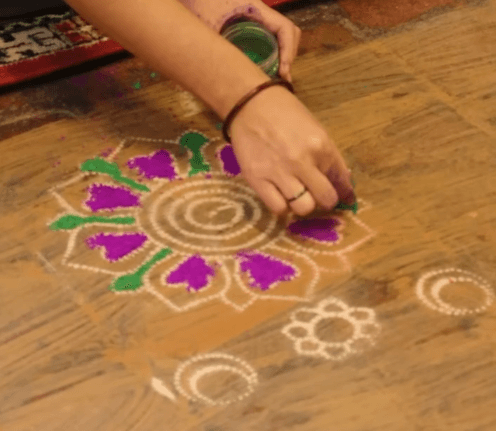
The Puja is usually performed on the dining hall floor with all the family together. Mandalas are the essential part of the Mha Puja and are drawn for each member, including two extra Mandalas for the god. All family members sit crossed legs in front of their respective mandalas, and the Puja is performed by the eldest female member of the family.
The Puja begins with putting tika on the members and lighting the wick next to the mandala. Then the family members are presented with holy thread and citron fruit, signifying good things coming their way.
Every food and ritual performed in the Puja are symbolic in accordance with the elements of the universe. Symbolism exists in the gestures, elements used in the ceremony, and even in the food. The mandala represents the universe incorporating the five elements: earth, fire, water, air, and space. Burning jajanka also embodies spreading light to others and the fact that life is not infinite. Likewise, fruits are for good fortune and longevity. The eight elements have exceptional symbolics on Mha Puja, which makes us sense the universe and highlight our importance in the world.
No Newar festival is complete without a big feast, hence continuing the bond of food and culture share, Samaya baji is served after worshiping oneself. And this way, the mandala is destroyed, signifying the impermanence of the universe. The feast served is arranged in resemblance to mandala: a mound of beaten rice in the center surrounded by eight side dishes.
In this manner the annual celebration of Mha Puja is completed honoring oneself and nourishing the sense of togetherness in family. The significance of the Mha Puja celebration is similar in both Patan and Kirtipur, except for a few rituals and manners.
Understanding and honoring oneself is essential to understanding and being empathetic to other beings. You can be part of this day about keeping yourself and taking it as an opportunity to feel your soul more profoundly than usual and be aware of your existence. This immersive opportunity allows you to live a unique moment with the host family and understand their culture.

Experience Mha Puja in Nepal: The Newar Ritual of Worshiping Yourself not as a spectator, but as a part of the family. Stay with local hosts, join their celebrations and experience the true spirit of Nepal.