



Discover Yomari Punhi, the Newar rice harvest festival in Panauti. Learn the legend of Goddess Annapurna, taste the sweet Yomari, and join the celebrations.
Yomari Punhi is another of the numerous Nepali festivals celebrated by the Newar community with great joy and passion. It is another beautiful example of the importance of food in their culture. Throughout the year, Newar has diversified festivals with special foods that positively impact the body; each feast is carefully chosen so the body can be healthy. And Yomari is known to be eaten in winter because it keeps the body temperature high. This dish is also given to pregnant women because it is very nutritious.
A long time ago, in Panauti, a couple named Suchandra and Krita decided to bake Yomari with fresh yields from their rice field. It was so delicious that they were determined to share this delicacy with the whole village. The dish was so much appreciated that they decided to call it “Yo” love, “Mari” Bread - “Yomari” means “bread loved by everyone.” Little did they know that Goddess Annapurna, Goddess of grains, was here, disguised. Annapurna adored this rice flour bread and felt happiness going through her soul while eating it. After having such a good dish and seeing how the couple was so generous, she decided to bless the couple with prosperity and wealth. Since then, it has become a tradition to offer Yomari around December to worship god and mark the beginning of the rice harvest season.
Yomari Punhi (Punhi comes from Purnima, which means full moon) is celebrated to thank the gods for food and grains; they worship Ganesh, Kubar, Kumar, and Annapurna; people wish for Harmony and unity. Those four gods each have a different type of Yomari that represents them. The one with sugar cane (chaku) and sesame seed represents Mahamaya, the one with meat represents Ganesh, the one with black lentils represents Kumar, and finally, the sweet Yomari made with condensed milk, which is eaten on the last day, represents Prasad.
This tasty bread is essential in Newari culture; on a child’s 2nd, 4th, 6th, 8th, and 12th birthday, Yomari is given not to eat but to be worn as garland. The number of Yomari on the garland depends on the age they are celebrating.
Celebrating Yomari Punhi in Panauti seems logical as the legend started in the “Panchal Kingdom,” now known as Panauti. After Suchandra and Krita were blessed by Goddess Annapurna, people began to celebrate Yomari Punhi.
Those four felicitous days are grandly celebrated by the Nepalese, mainly the Newar Community from Panauti. In the evening, children go from house to house while singing the Yomari song to receive this delicacy. During this period, people worship gods such as Ganesh, Kubar, Kumar, and Annapurna. They cook Yomaris in the form of the gods to honor them and to enjoy this tasty meal. On each day of the festival, they eat a different kind of Yomari, each representing a deity, the last being the sweet Yomari, to praise Goddess Annapurna. In addition, throughout the days, traditional music and dance are filling the streets of Panauti.
Preparation of Yomari Punhi in Panauti begins from the Tihar as a certain amount of rice is separated on the day of Tihar. The same rice is made flour the day before Yomari Punhi to cook Yomaris for the festival. They bake a big Yomari and smaller ones that represent Kuber and Laxmi and put them in Bhakari (a bamboo box often used to put rice) and finally, do puja. The inhabitants would do a special puja ceremony to celebrate Yomari Punhi. In addition, the family members gather and eat this delicacy. The special day for Yomari Punhi is the First Fullmoon Day of Magsir month in the Nepalese calendar.
Celebrating in Panauti is an excellent opportunity to glimpse traditional life in a very authentic town of Nepal. You will be able to witness the joyful crowds of Nepal. Moreover, it is the perfect moment to taste this delicious popular food. Yomari is an integral part of Nepali culture; by participating in Yomari Punhi in Panauti, you embrace their culture and create unforgettable memories.
This festival lasts four days; throughout this period, Nepali people pray, dance, and enjoy Yomaris.
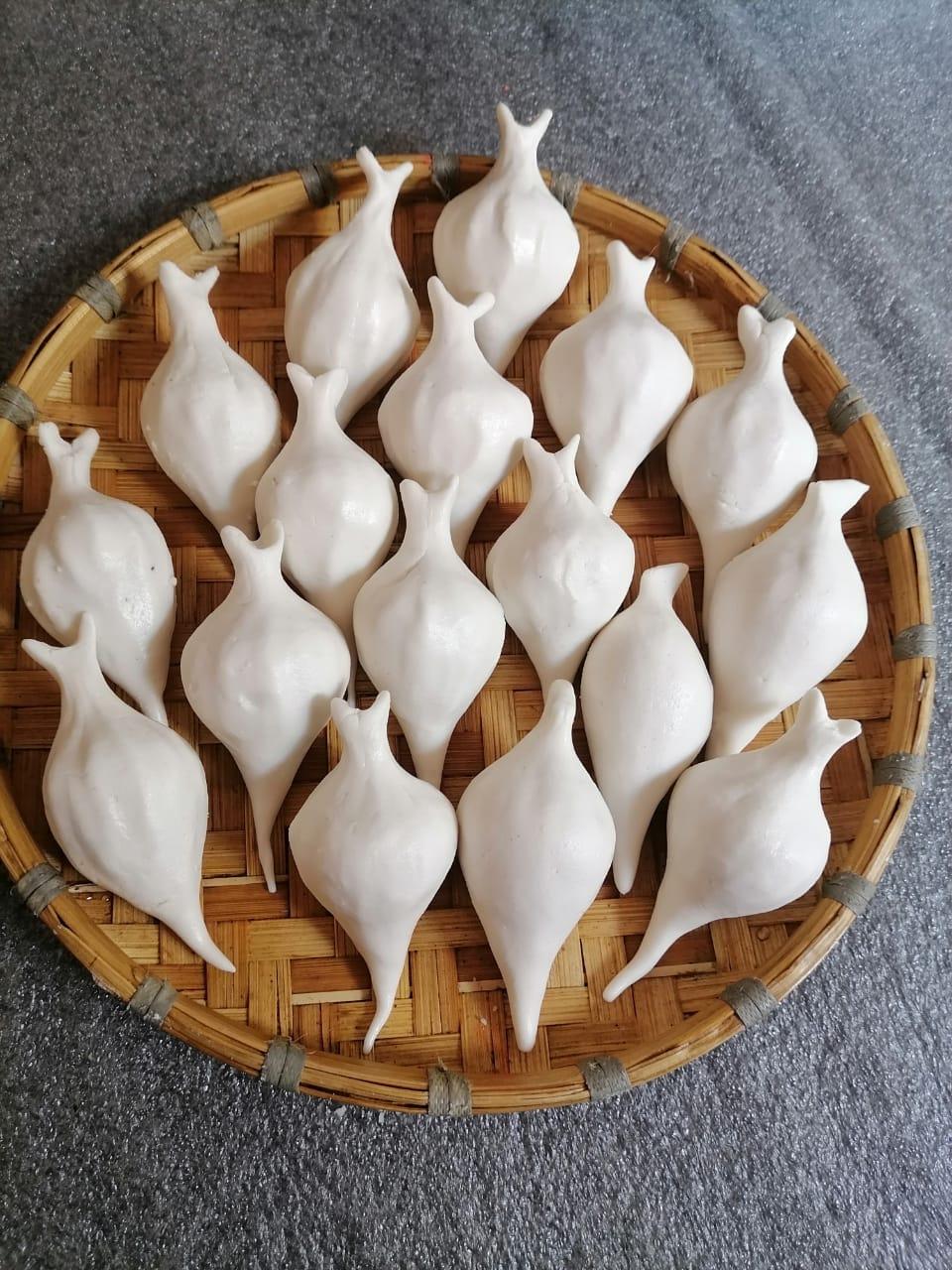
The men wear black dotted Daura and the women Haku Patasi - traditional outfits. Children also dress in formal attire and go from door to door so they can receive Yomari. As they are seen as avatars of the Gods, they are highly respected on these kinds of days, this is why people offer them this delicacy. Some children sing the Yomari song :"Yomaris are pointed and filling is sweet. If you give me bread, you are pretty; if not you are ugly", while they ask for the dish. The days are rhythmed by music and dances, which is recurrent in Nepali festivals; it gives a festive atmosphere in the cities celebrating. People gather around to play Dhima Baja, traditional Newari drum music. Dance masks are performed in the streets. It is the opportunity to mix up with people and share a magical moment; no need to talk; you can enjoy the sound of the melodies and the sincere smile on everyone's face.
For this festival, the Yomari is done differently than usual. They usually look like a kind of fish, the two extremities are thin, and the middle is large, prominent, and round. In the middle, they put the different fillings, chaku, meat, black lentils, or condensed milk. Yomari is compared to the earth, with one side assumed to be North and the other to be South. However, on the second day of Yomari Punhi, they cook the food in the form of the gods. It is seen as a form of worship as they swallow the special Yomari. It is like the god enters the human body; both energies intertwine momentarily.
It is at night that the most significant celebration takes place, observed at Dhaneshwar Mahadev temple. In addition, there is a tradition of doing Deepavali at home, which is putting lights up; it is so God can acknowledge their houses to bless them. Nhakatya is another tradition when married daughters return home to eat some Yomari with their family.
Yomari Punhi is a festival that gathers people together to savor life while dancing, singing, and eating. This particular dish is meaningful in the Newari culture. The numerous festivals of Nepal gather the population together; it is an example of the joyful personality of Nepali. Their relationship with food is significant, especially in the Newar community. Moreover, cooking and eating are also ways of sharing a moment with your family or friends. Nepal has this strong essence of community that is inspiring.

Experience Yomari Punhi: Nepal’s Sweet Newar Harvest Festival not as a spectator, but as a part of the family. Stay with local hosts, join their celebrations and experience the true spirit of Nepal.