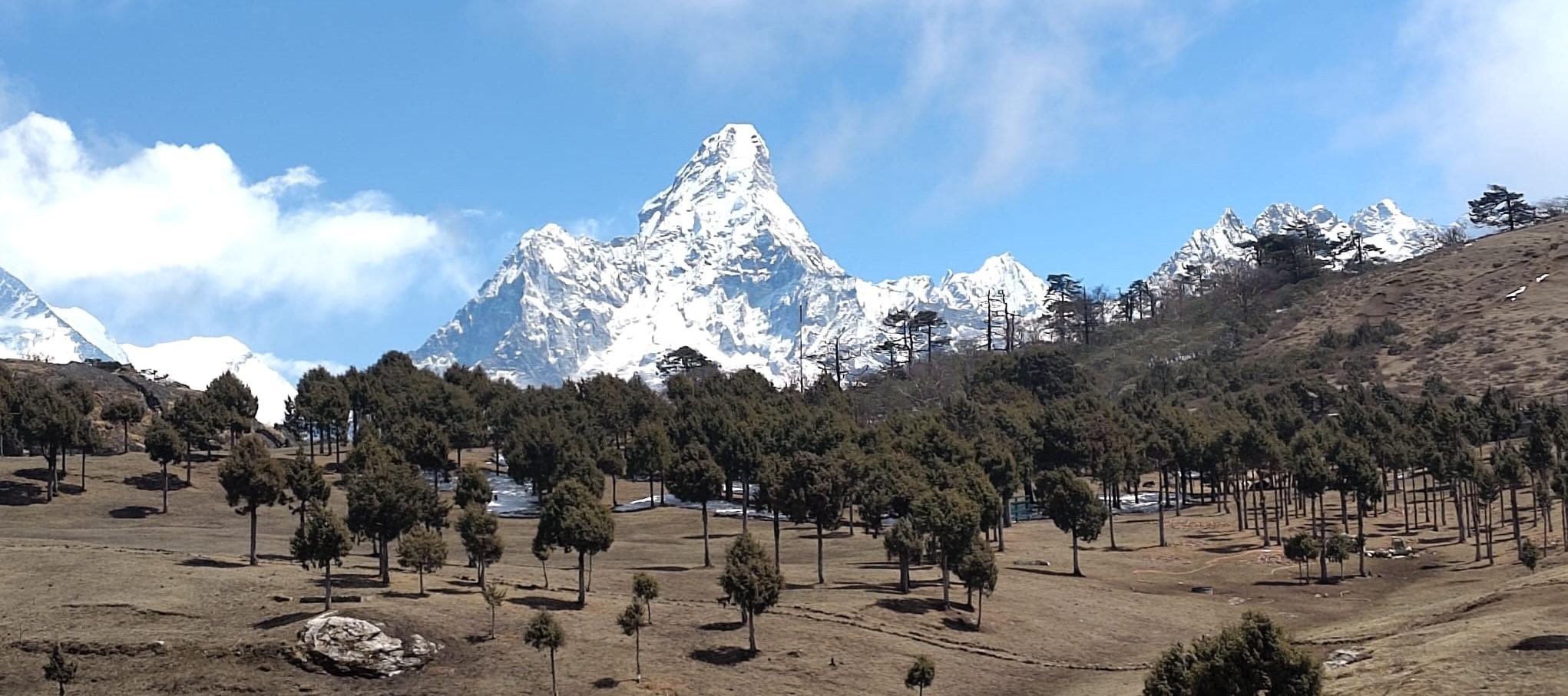
Welcome to Khunde – Home of the Sherpas
They are known for carrying weights that most normal people have trouble lifting at all up steep trekking paths at speeds that put most other trekkers to shame. Sherpa has become a term globally associated with almost inhumanly strong and enduring porters who support and guide trekking and mountaineering expeditions in the world's highest places. Even beyond the actual profession, the term has gained significance, for example, in juristic or diplomatic language, a person with a mediative or guiding function in congresses and diplomatic meetings is considered a Sherpa.
Beyond the global narrative
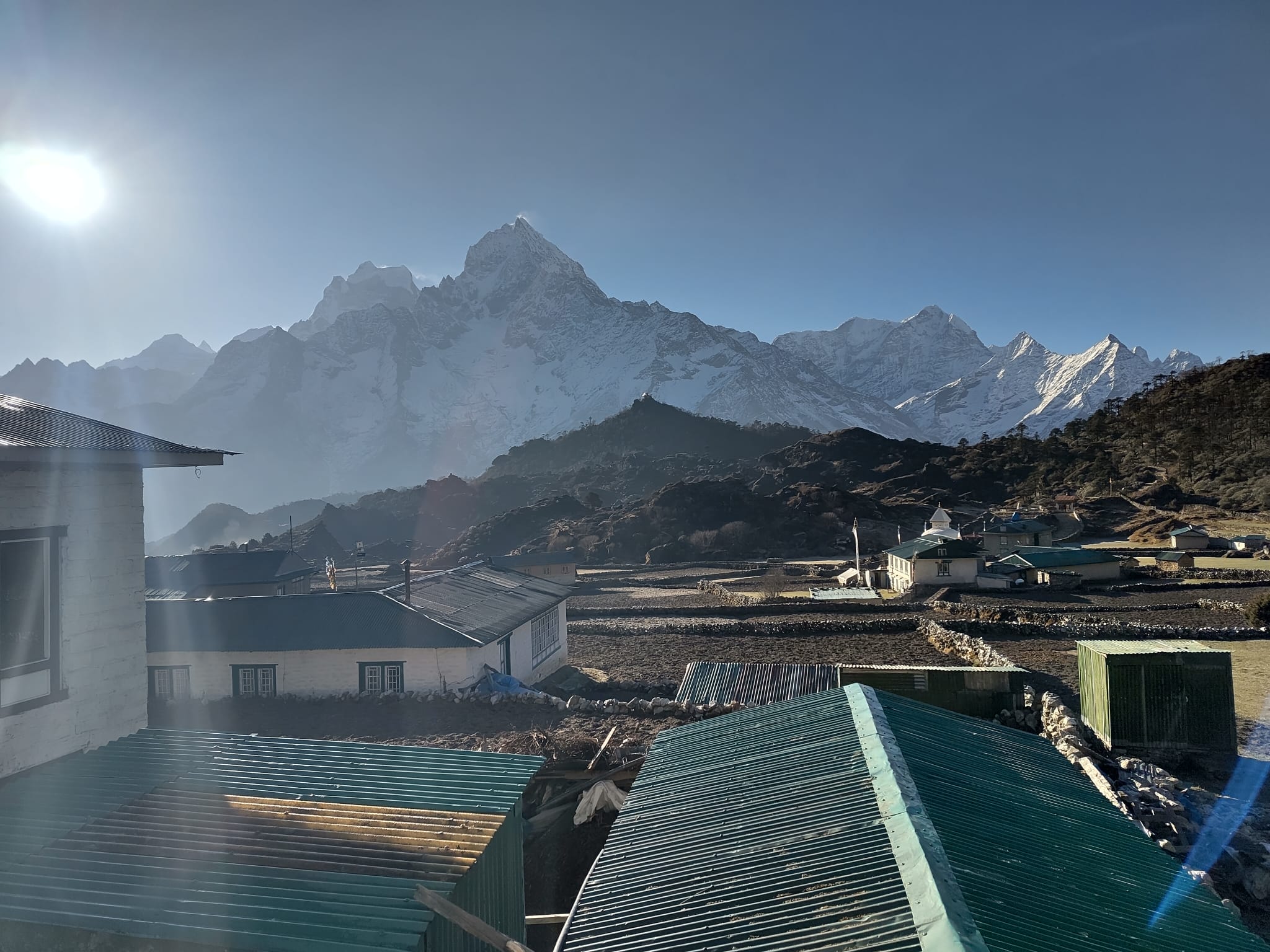
But Sherpa is much more than just the profession. Sherpa is one of Nepal’s ethnic groups, with their own history, language, and beliefs. And like the Tharu People from the South or the Newari Communities, strongly represented in the Kathmandu Valley, locals of the North-East Himalaya belong mainly to the Sherpa Community. Sherpa culture has its own unique faiths, traditions, and living stories. Migrated over five hundred years ago from neighboring Tibet, they settled in the Himalayan Valleys, places like Namche Bazaar,
Khunde, and Thame. They made a living in the world's highest mountain range and worked for many centuries as herders, farmers, and traders before becoming the world's most famous mountain guides.
It is important to note that the significance of the role Sherpa people play as porters and guides is crucial for maintaining infrastructure and the trekking and mountaineering industry in the Khumbu Region. Even to this day, in an age of Helicopters and inland flights, the immensely vast and tirelessly working network of caravans of donkeys, yaks, and Sherpa porters, spanning hundreds of kilometers and thousands of meters of elevation, is necessary to provide food, medicine, and other necessities to countless trekking lodges, hotels, and hospitals. Without the extraordinary achievements of the Sherpa Porters, Herders, and Guides, one of the most popular places in the world for trekking and mountaineering could not exist in the way it does.
Invisible before your eyes
And yet thousands of international travelers hike up the Khumbu and Gokyo Valley to the Everest Base Camp and other renown places each year without recognizing or engaging with the culture of the people that shaped this remarkable place over centuries and made it accessible to the rest of the world. Although the Sherpa Culture is vibrant and alive, right before the travelers' eyes. An observant trekker might notice that most Sherpa people pass the century-old Mani Stone Shrines, respectfully on the left side, in accordance with ancient Buddhist beliefs. Or that before drinking their local liquor, three drops are spilled in honor of the gods. Such and many other traditions have been practiced for centuries, long before the first foreign trekker or mountaineer set foot in the Himalaya.
Beyond Namche
The vibrant Namche Bazaar has been a hub of trade and life since the ancient trading route connected China, Tibet, Nepal, and India. Until today, it is a place most travelers and adventurers don’t miss out on. And with all the cafes, pizzerias, and even an Irish Pub, arguably the highest in the world at 3500 meter above sea level, it is undoubtedly a unique place to behold. However, if a traveler seeks a more immersive cultural experience, they don’t need to look far.
Welcome to Khunde!
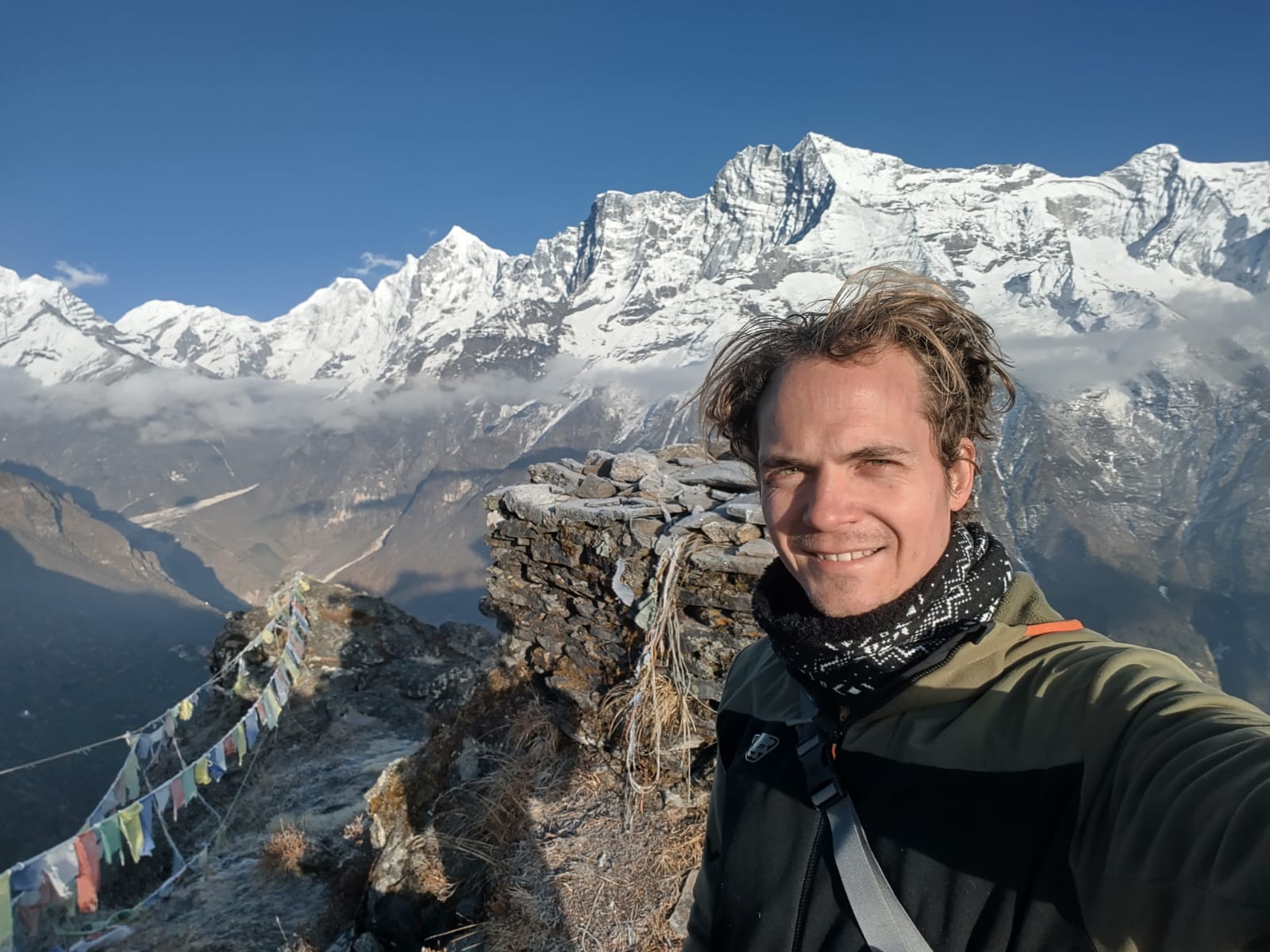
Only a forty-minute hike north of the bustling Namche Bazaar lies a serene village full of yaks, welcoming host families, and a vibrant Sherpa culture. A stone path flanked with blooming trees and moss-covered boulders, which seem out of a fairy tale, leads past a yak farm, Buddha stupas up to the hidden Sherpa village of Khunde. Nestled in a light dale, the blue-roofed houses and yak yards, enclosed by low stone walls, arrange themselves around the Monastery, which lies at the center of the village.
In this picturesque place, 19 homestays of Sherpa Families are welcoming travelers, sharing their stories, secrets of their cuisine, and explaining their unique beliefs. Travelers can learn how to cook Rikikur, a delicious Potato Pancake or taste the home-made Raksi, the local liquor. With good weather, the nearby Khunde Peak can be summited in the morning to enjoy the sunrise and behold a breathtaking panorama including the world's highest peak, Mount Everest. Only a fifteen-minute walk away lies the neighboring Khumjung village, where the Hillary School Museum or the local monastery can be visited. The museum illustrates the impressive history of the school, the inspiring artworks of Khunde and Khumjung's next generation on climate change and Environmental Protection. With Namche being the place where most trekking expeditions spend one or several days acclimatizing, it might be worth considering spending a day in Khunde instead and getting to know the people whose homeland one is trekking in.
Understanding the land one is visiting
If you are planning a trek or expedition in the Khumbu Region and the breathtaking Sagarmatha National Park, you are not only entering the world of the highest mountains on Earth, but also a region shaped by a remarkable community.
The Sherpa people, renowned globally for their expertise in high-altitude mountaineering and guiding, are also the heart of this destination, warm, resilient, and deeply rooted in their culture and homeland. Their knowledge of the mountains, passed down through generations, has made traveling and understanding this region possible in a safe and respectful way.
What we need to understand and move beyond is the limited popular narrative. The Sherpa community are not just associated with high-altitude work, but are the custodians of this extraordinary environment. Their deep-rooted connection to the Himalayas, along with their resilience, knowledge, and hospitality, continues to shape and enrich the experience of everyone who visits.
Highlights of Khunde
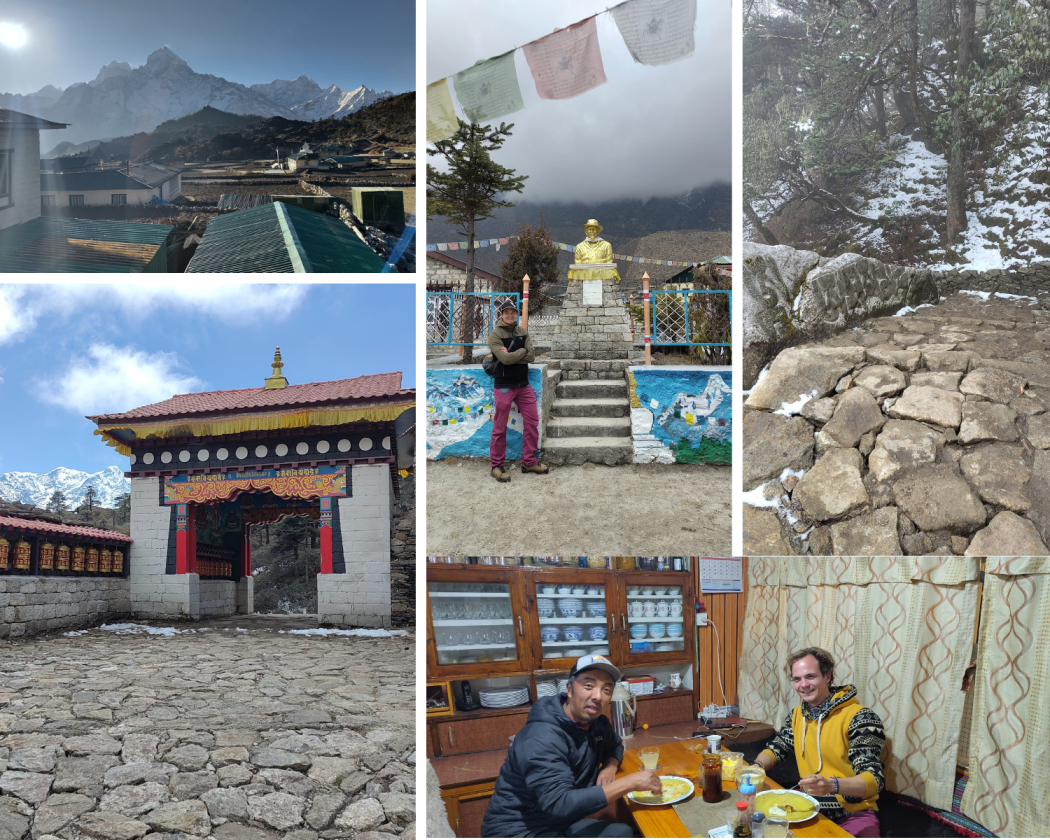
Hike to the Khunde Peak 4200 meter above Sea Level and behold the breathtaking 360 degree Panorama of majestic peaks such as Everest or Ama Dablam.
Take a Cooking class and learn to make traditional Sherpa Dishes like Rikikur or Sherpa Stew.
Explore the Hillary School Museum and learn more about Sherpa history and the current perspectives of Khunde’s Children on their Environment
Visit the Buddhist Monastery exhibiting the mysterious Yeti Scalp in neighbouring Khumjung.
Experience a ceremonial dance performed by members of the Khunde community.