



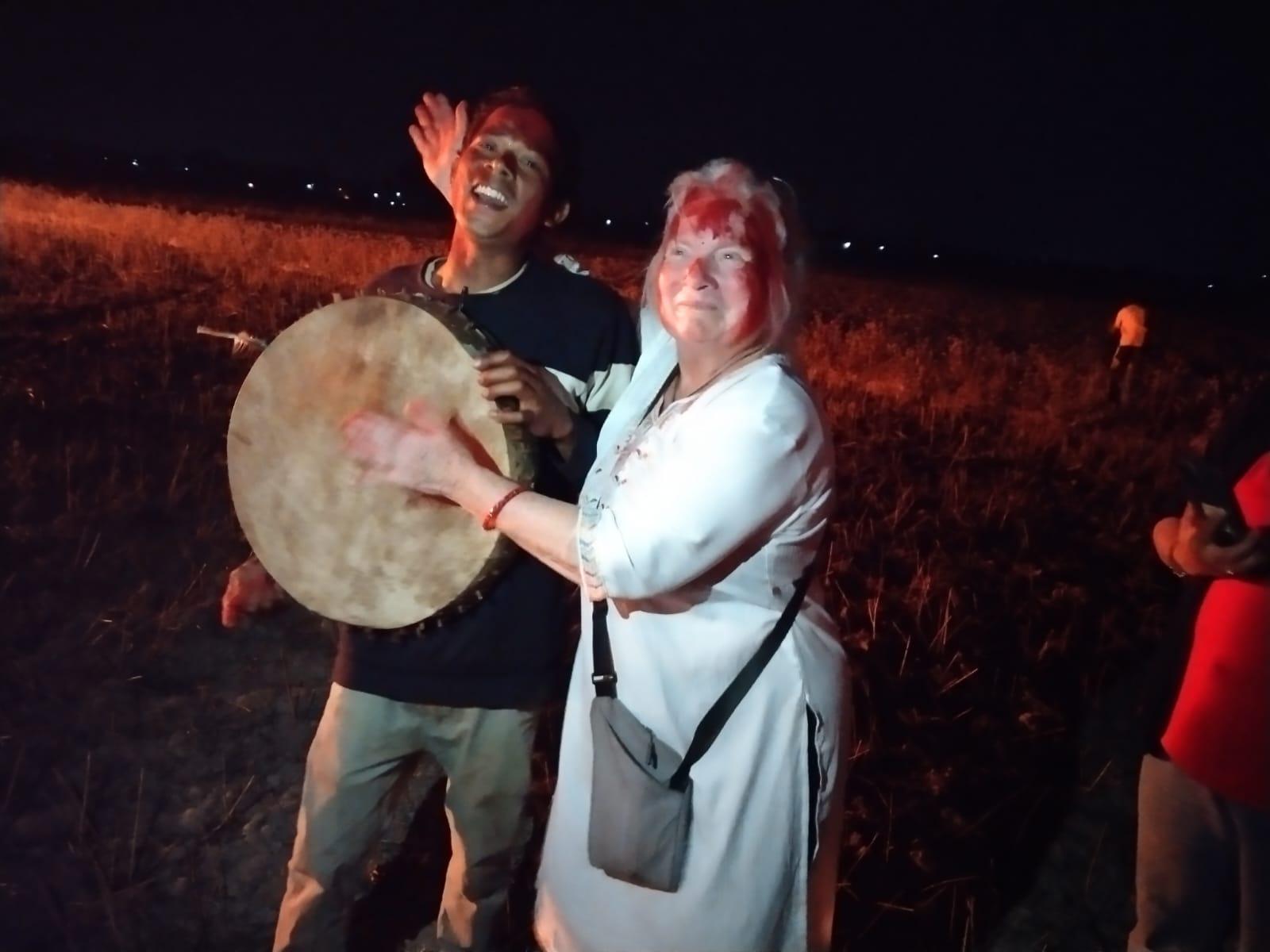
Holi, Nepal’s festival of colors, is celebrated in the month of Falgun and marks the victory of good over evil, inspired by the legend of Prahlad and Holika. In Kathmandu, the festival begins with the raising and burning of a ceremonial pole at Basantapur Durbar Square, while the Terai celebrates with even greater energy. For a more authentic experience, rural communities near Chitwan National Park keep traditions alive with Holika scarecrow burnings, all-night folk songs and dances, and joyful color play shared by everyone.
The festival of colors, Holi, is celebrated with different colors and water.
Holi in Nepal is celebrated in the month of Falgun with great joy and cultural significance.
Celebration of Holi differs with the geographical variation. In Kathmandu, the celebration begins with the raising of the ceremonial pole in the Basantapur Durbar Square. The pole is embellished with colorful cloth strips and is raised a week before the festival. On the eve of the festival the pole is taken down and burned down embarking the beginning of Holi. The process is known as Holika Dahan or Chir Haran.
In Terai, Holi is another biggest festival after Chhath, here the festival of colors is ever more festive with louder feelings and vigor. It is observed as a victory of justice over injustice.
Like any other festival, there are many myths and tales associated with the celebration of Holi. The most popular tale is of Prahlad and Holika.
In this tale, Demon King Hiranyakashipu started thinking he was the only Lord in the universe and wanted his kingdom to worship only him. But to his disappointment, his son Prahlad, was a sincere devotee of Lord Vishnu. As the king was against his son’s devotion he planned to kill his own son with the help of his demoness sister Holika.
Holika was blessed by Lord Brahma and was immune to fire. She had a shawl which would protect her from the fire. Holika lured Prahlad to sit with her in the huge bonfire. However, as soon as the fire soared Holika was the one who had to pay the price of her sinister desire with your life. Prahlad’s prayer to Lord Vishnu saved him from the fire and burned Holika to her death. The name Holi derives its name from Holika and is celebrated as a festival of victory of good over evil.
Whatever the reason, Holi is colorful with shades of color smeared on the faces and the enthusiasm of celebrators. The grandness of the festival is revered throughout the nation evidenced by the colorful faces of the revelers.
Festivals these days are very much influenced by modernization. The traditional approach of the celebration is very much in threat in the city area. However, the authenticity of the culture is somehow retained in the rural communities.
Celebrating Holi with the local communities is an opportunity to immerse in the culture and lifestyle of the community people and experience the Holi in the way you haven’t experienced.
Piprahar Community Homestay, located on the edge of Chitwan National Park, celebrates Holi in a very distinctive manner. Majorly resided by the Tharus, the celebration of Holi is much more like how we usually celebrate. However, the unique rituals followed on the main day of the festival sets Piprahar’s celebration apart.
The liveliness of the festival begins a day earlier than the main day of the festival. Influenced by the legends they believe, the ritual is performed on the eve signifying burning of Holika. The day before the main festival, 20-25 scarecrows are built signifying Holika . The structure base of the scare crows are hollow where the special priest from the Tharu community does the Puja. After the completion of Puja, the scarecrows are burnt in the name of victory of God over Demons and the people dance, sing and perform “parikrama” (going around) of the fire. People stay around until the fire dies out. The older people go from house to house, singing folk songs and dancing for the whole night. The host families treat the entertainers with food, money and local beverages.
Holi officially started with the burning of Holika and on the main day of the festival people come together to sing, dance and splash each other with colored powder and water. Despite the ethnic diversity, the joy is collective and the environment is vibrant.
The fact that with time, the traditional Holi celebrations are diminished with the migration happening in bigger cities. The culture and tradition are not transferred to the younger generation.

Experience Holi Festival in Nepal: Traditions, Legends & Authentic Village Experiences not as a spectator, but as a part of the family. Stay with local hosts, join their celebrations and experience the true spirit of Nepal.