True culture of Nepal
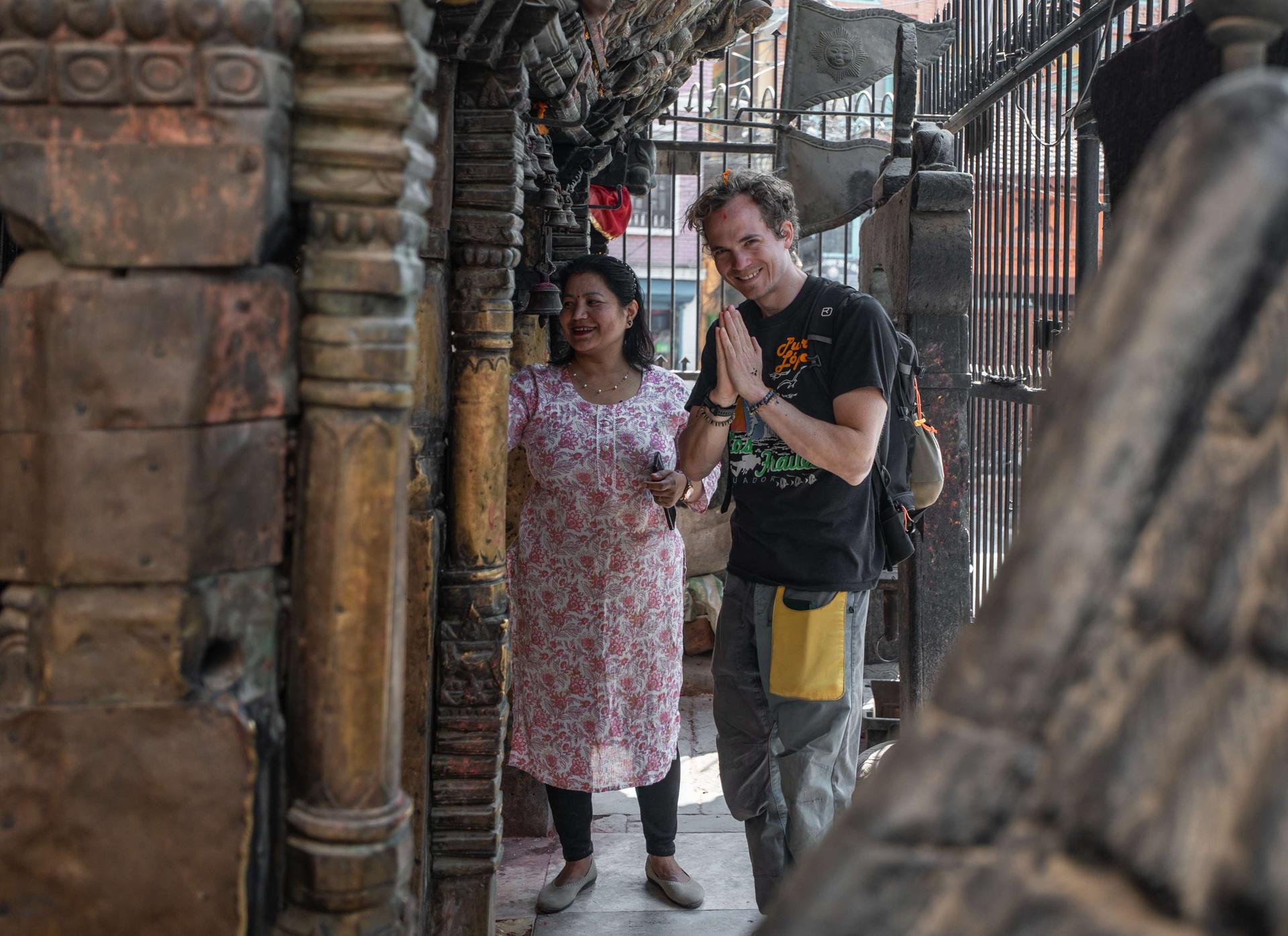
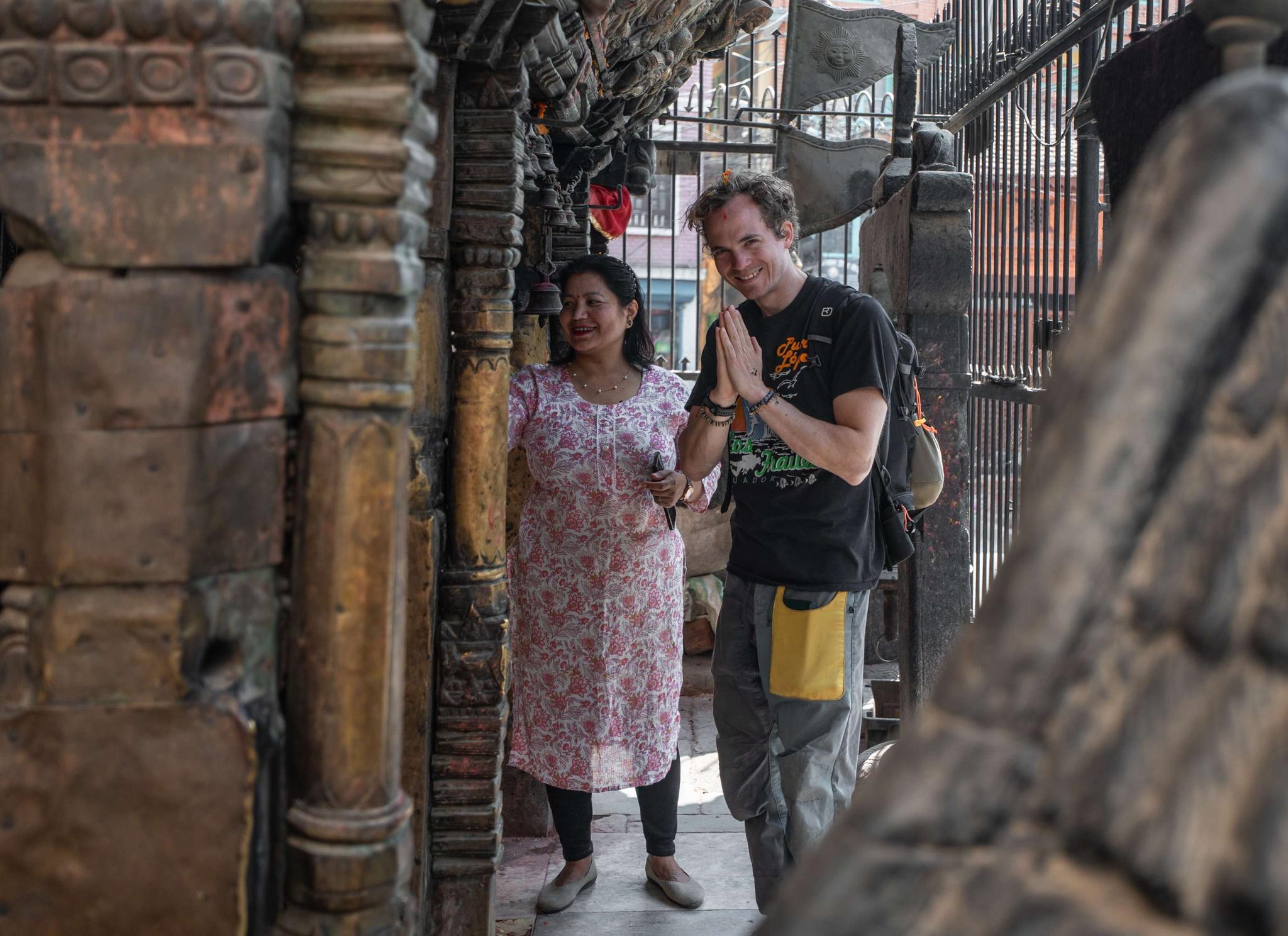
A visit to the capital is included in almost every trip to Nepal. The bustling streets of Thamel, the towering Swayambhunath, also known as the Monkey Temple, or the sacred Boudha Stupa, a monument of Buddhist beliefs, are visited by thousands of people every day. However, as impressive and significant as those sights are, one might find a different, truer part of Kathmandu’s identity in more hidden places. What has shaped Nepal’s rich culture over the centuries remains the heart of the country’s unique cultural assets. The secret gatekeepers of Nepal’s soul are the masters of its unique arts, crafts, and traditions. The people who not only know its century-old secrets but also exercise them day by day are the living embodiment of Nepal’s culture.
From the art of woodcarving to the in-depth knowledge of mask painting, from the meanings of knots, beads, and materials in a bracelet to the variety of Momo cuisine, the artisans in Kathmandu are as diverse as its culture.
Many of these craftsmen and women cooperate with Community Homestay Network (CHN) to share their knowledge and teach small parts of their skills to travellers in workshops lasting from several hours to multiple days. Giving tourists the possibility not only to read or hear about Nepal’s culture, but to live it. In my internship at CHN, I had the privilege of participating in seven workshops over three days, gaining insights into the arts and handicrafts directly at their source.
The meaning of beads
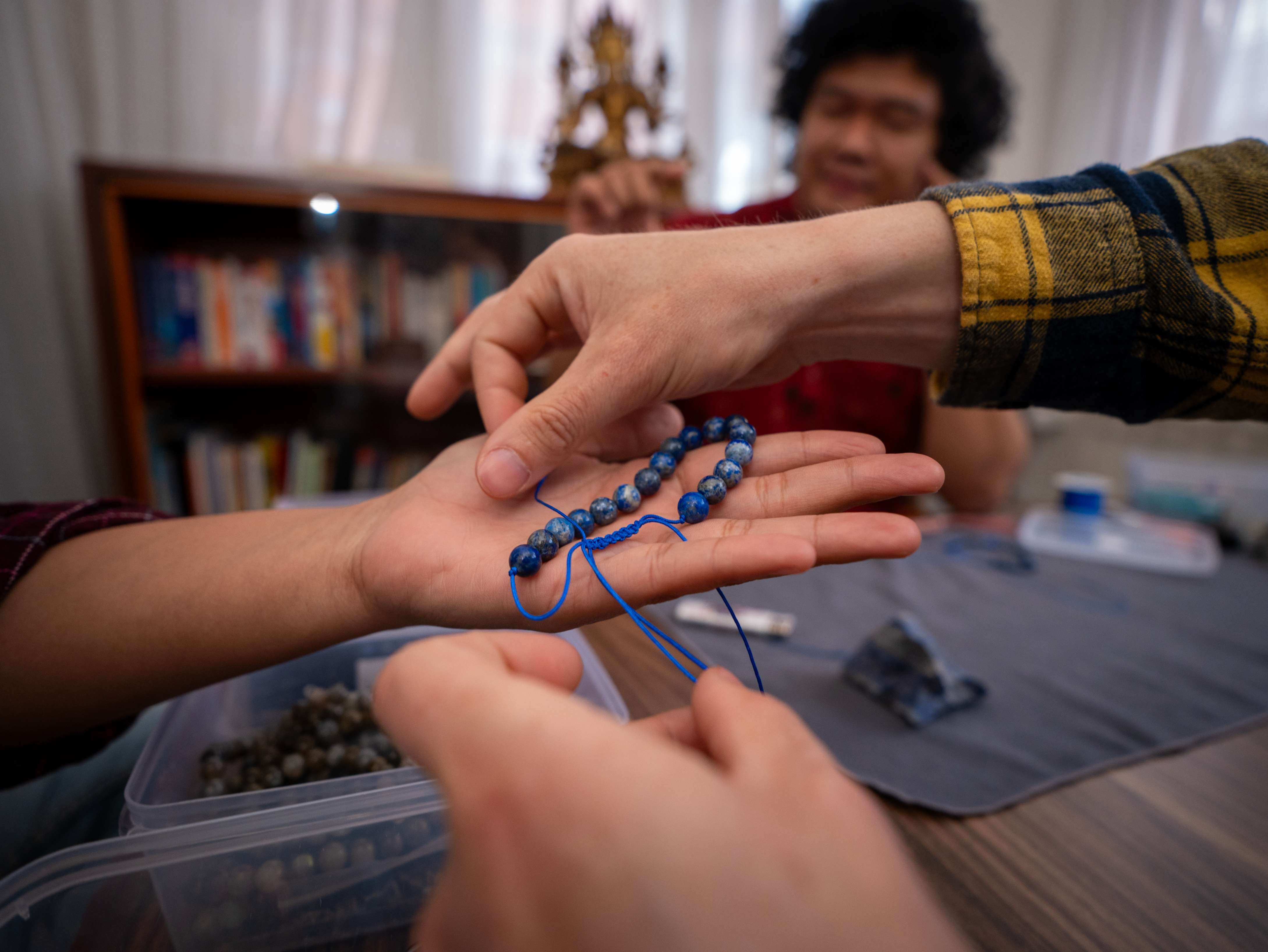
Our first stop was in Chabahil, near Boudha, in the studio of a bead artist. The artist explained the wide variety of materials and the crafting processes used to make the beads, as well as the traditional meanings of different numbers of beads in a bracelet. After the theory, it was time to lay a hand on myself and form my own bracelet out of beautiful Lapis Beads and conceal it with the artful knots.
Brushes talk history
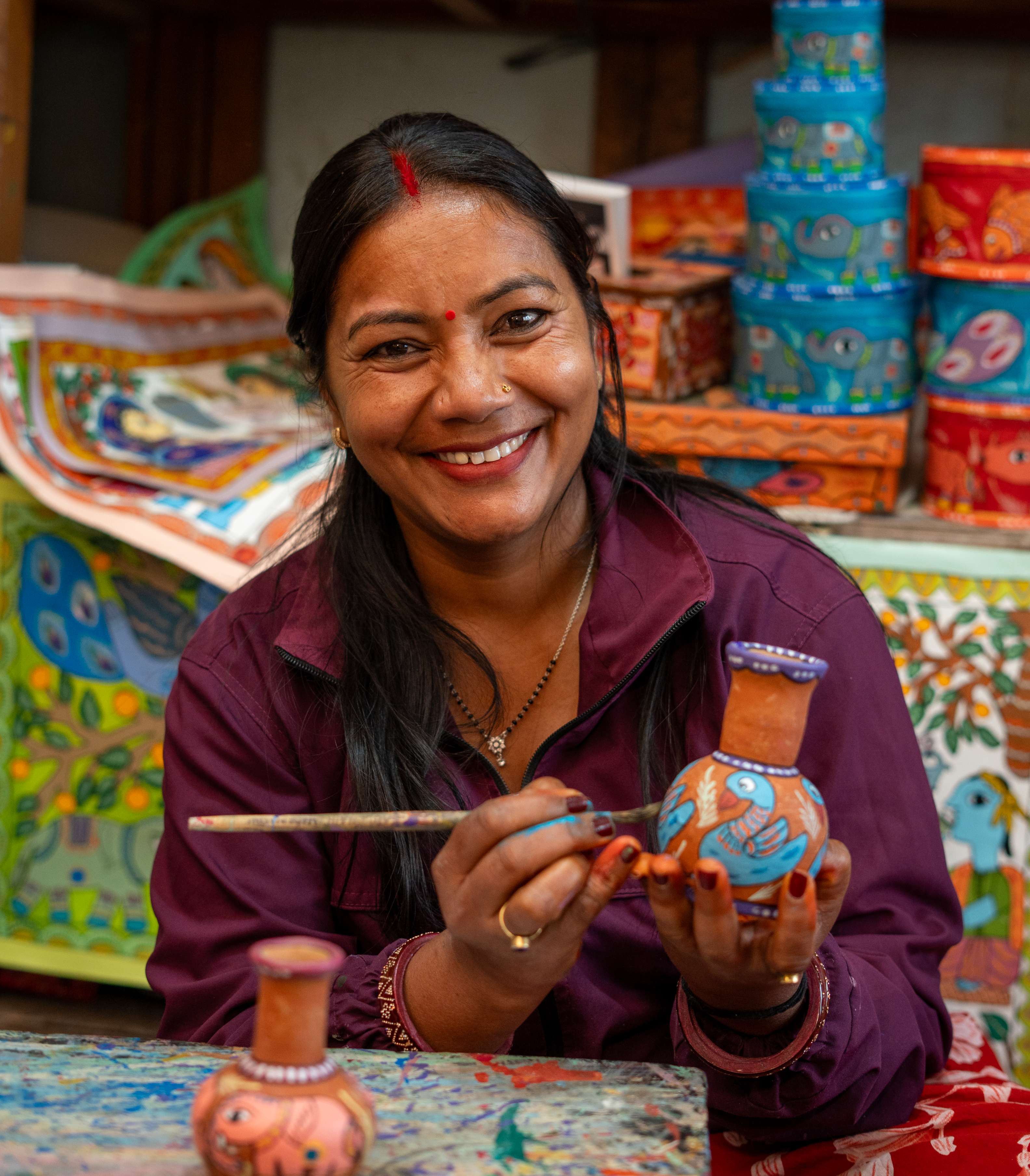
The next stop took us to Thimi, where, in a small studio, a group of female artists, with patient, skilful brushstrokes, created the unique Mithila Art. Originated in Mithila, the eastern Terai Region, this unique art of painting uses brushes, fingers, twigs and natural dyes to create mesmerizing pieces of story telling. Under the artist's guidance, I was able to paint my own small piece of art, although this terminology could be debated, especially when comparing my painting to the real masterpieces on the wall of the workshop.
Infinite Wood
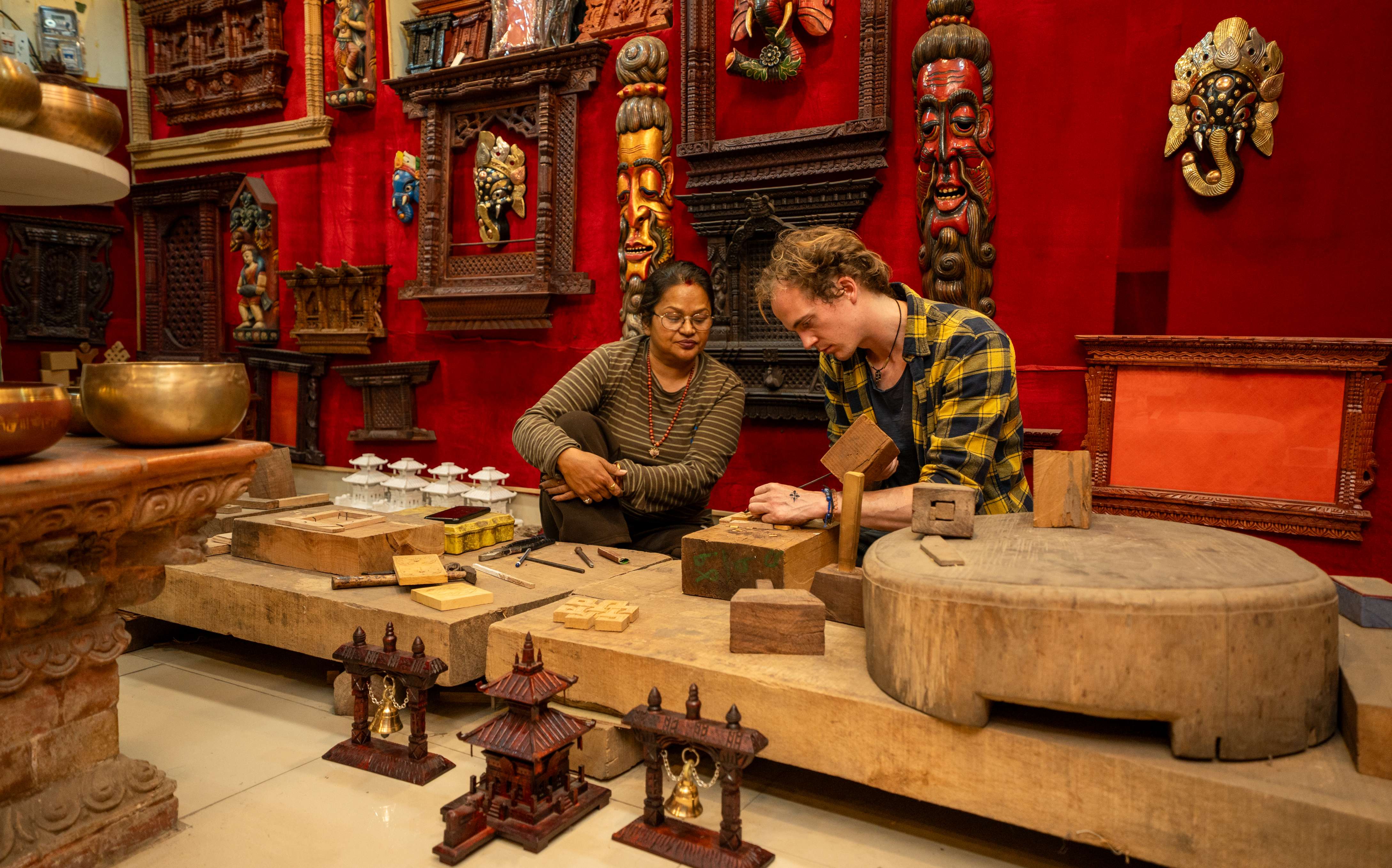
After my humbling but nevertheless enjoyable experience with brush and paint, we found ourselves in a small side alley in the old town of Bhaktapur, where a cosy wood-crafting shop was located. With a hammer and several craft tools, and again, the patient instructions of my experienced teacher, I was able, in a short time, to form from a simple block of wood a beautiful so-called “infinite knot”, a famous object of simple woodcraft.
Behind the Masks
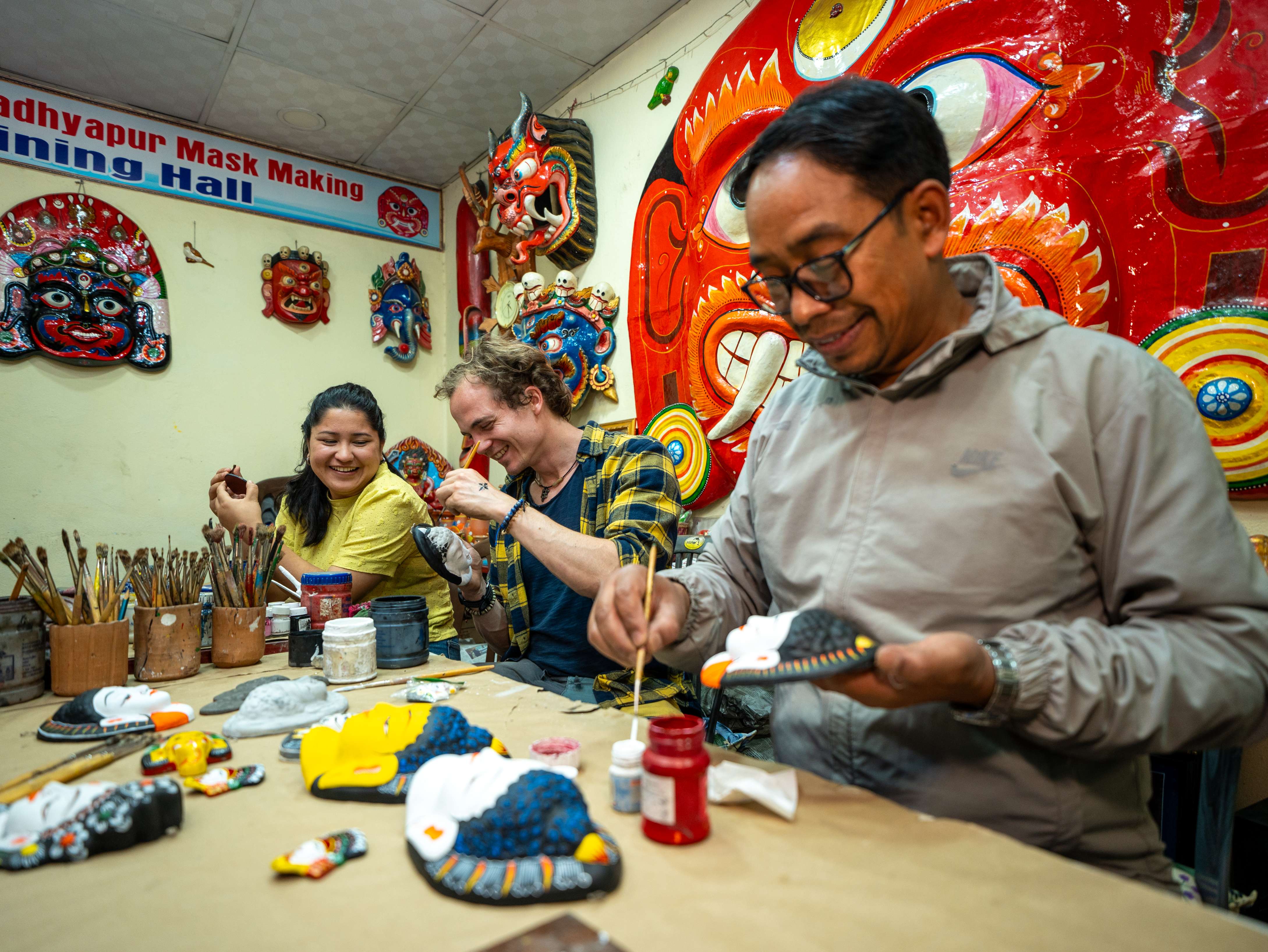
To conclude the eventful day, we visited a studio in Thimi, Baktapur, where, the art of mask painting was taught and exercised by the master artist Somtamang. 25 years ago, Somtamang started to learn the art of mask painting, which was an art originated from the Newar Kask, a strongly represented ethnic group in Nepal. Even though Somtamang belonged to a different Kask of mongolian origin, he was intrigued by the delicate art of creating and painting masks of deities, animals and spirits used in rituals, dances and nowadays as well as souvenirs for travelers. Nowadays he is one of the only artists still knowledgeable of the craft and he’s teaching the art to students, tourists and now also to his son, who is working with him in his shop in Thimi. With small brush strokes the masks were painted layer by layer in different colours until they looked as beautiful as the ones which decorated the wall of the studio. It was very interesting to engage with the artist and see behind the curtain, or behind the masks, of this unique and beautiful craftsmanship.
Nepal’s Crown Jewel
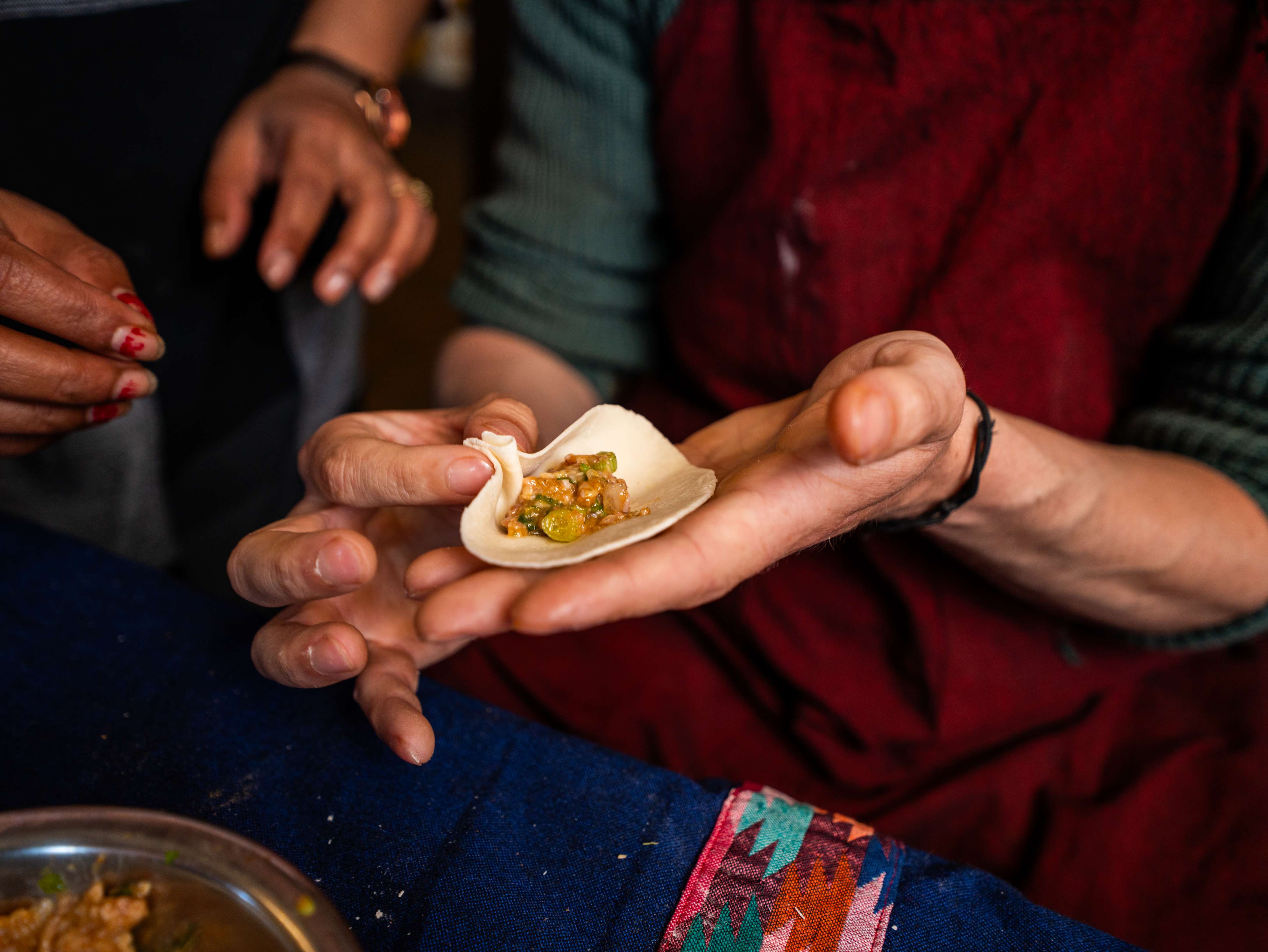
The next day, we visited the unique and bustling Patan, where the Newari Culture, one of the strongest represented ethnic groups in Nepal, lives and breathes. There, inside a peaceful courtyard, one can find not only a lovely homestay to immerse oneself deeply in the Newari culture for a couple of days, but also experts in one of Nepal’s most famous arts: the Momo Cooking. I was intrigued by the number of ingredients and spices we used as well as of the processes of cooking ingredients, mixing others and adding them in certain orders to create in the end two delicious sauces and the famous little steamed dough-dish, all of which Nepal and the rest of the World love. It is always fascinating to see how something is created from scratch. But to participate and being able to do all the different steps myself, from the cutting of vegetables, to adding spices, folding the Momo in the right way, which is harder as it sounds (!), and to eventually taste them was a truly memorable experience. Especially because they were the best Momo I ever had!
Silver Philosophy
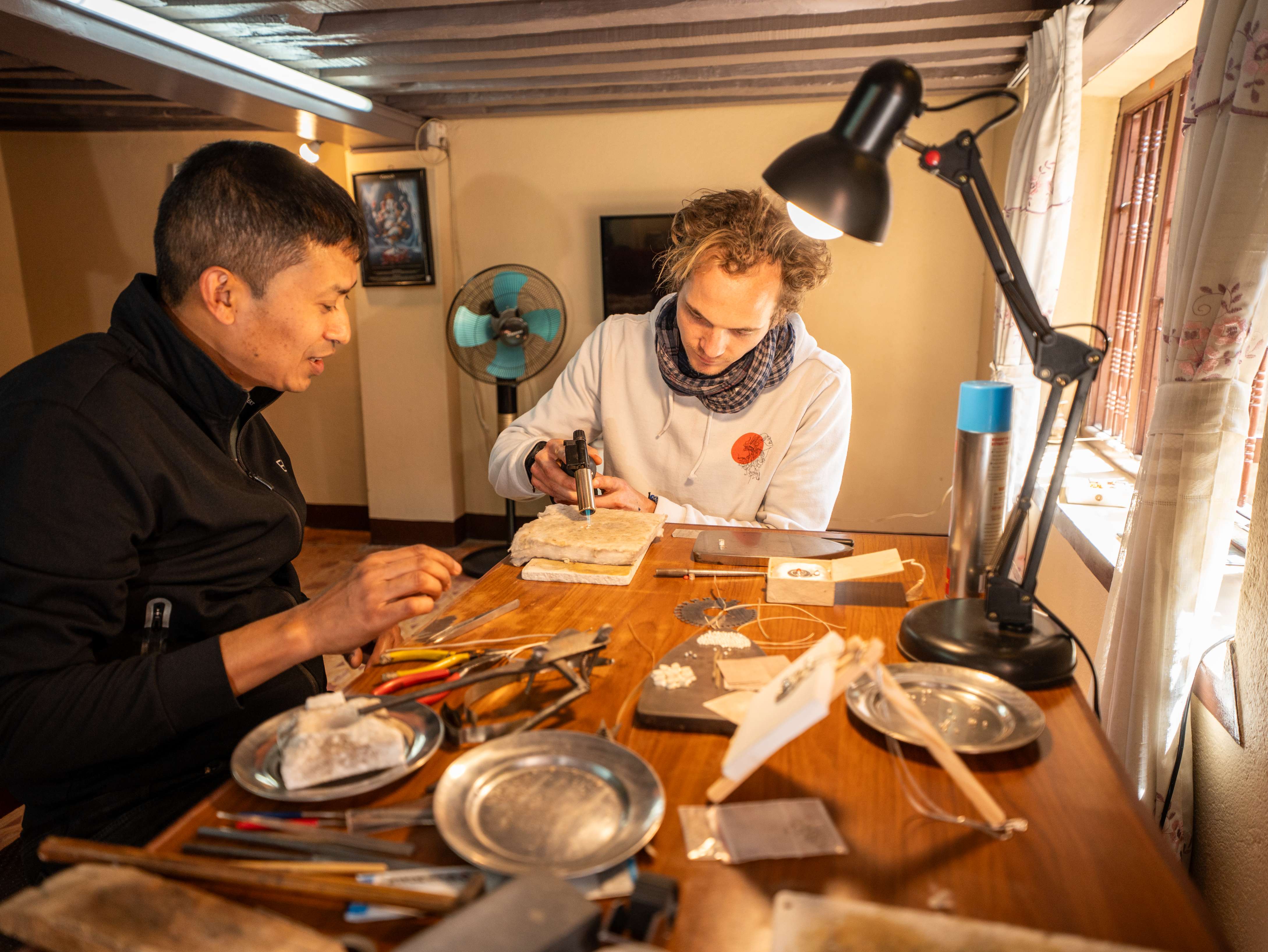
One of the most unique workshops I’ve ever experienced took place in Patan as well. In an unassuming courtyard, we found the shop of a real silver artificer. Here I was shown and learned about the intricate art of crafting silver into beautiful masterpieces. Not only were they amazingly beautiful to look at, but each layer of those pieces also had a philosophical meaning related to the Buddha's teachings.
Carved into stone
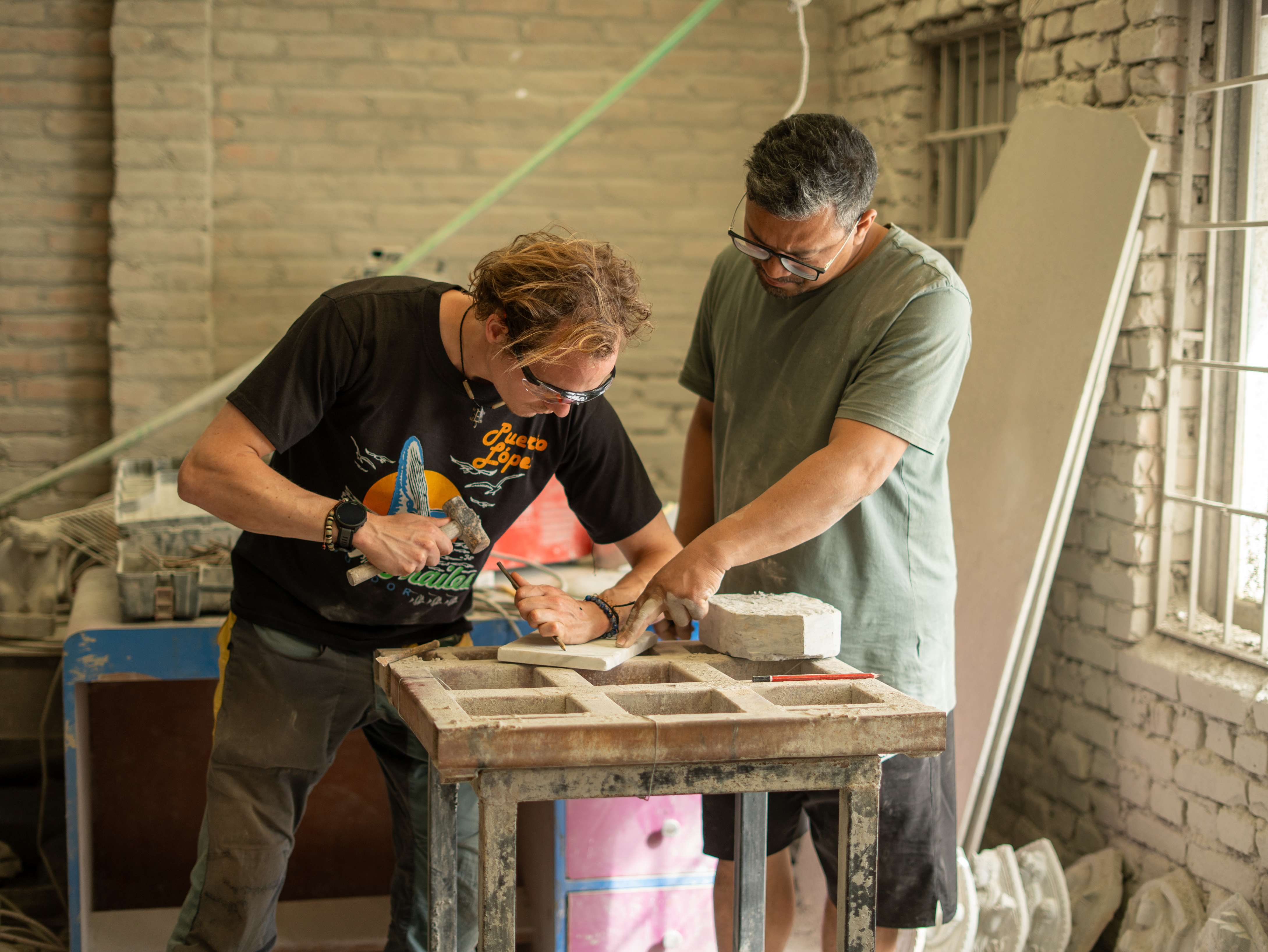
The last but not least of the workshops was a stone carving studio. The skilled craftsmen were working on an eighteen-ton statue, an order of Nepal’s city hall, when we visited. I was taught the basics of stone carving, the difference between hard and soft stone qualities, as well as the techniques of one, two, and three-dimensional carving. After that I was allowed to work with the hammer and chisel myself. I was surprised by how much more technique and finesse instead of strength the art required. As well as how challenging it was to chisel a simple straight line or a curve. But under the patient guidance of the skillful artist, I was able to carve the silhouette of a flower in a small piece of stone. I was amazed by how much effort it took me to create something so simple but also how satisfied the achievement made me feel.
Living Culture
Those three days showed me a different face of Nepal's identity. Even though the stunning temples and squares in the capital are mesmerizing and impressive in their architecture and significance for the culture, for me the experience in these three days was able to help me better understand how vibrant and diverse the Nepali culture truly is. I felt that while monuments are symbols of a culture, people, knowledge and traditions are its life-blood. And there is no way to experience this closer as if to interact with the people that carry this knowledge with them to this day and into the future. And by booking an activity or a homestay we as visitors can not only contribute to the preservation of this unique cultural diversity but also get the chance to live it.