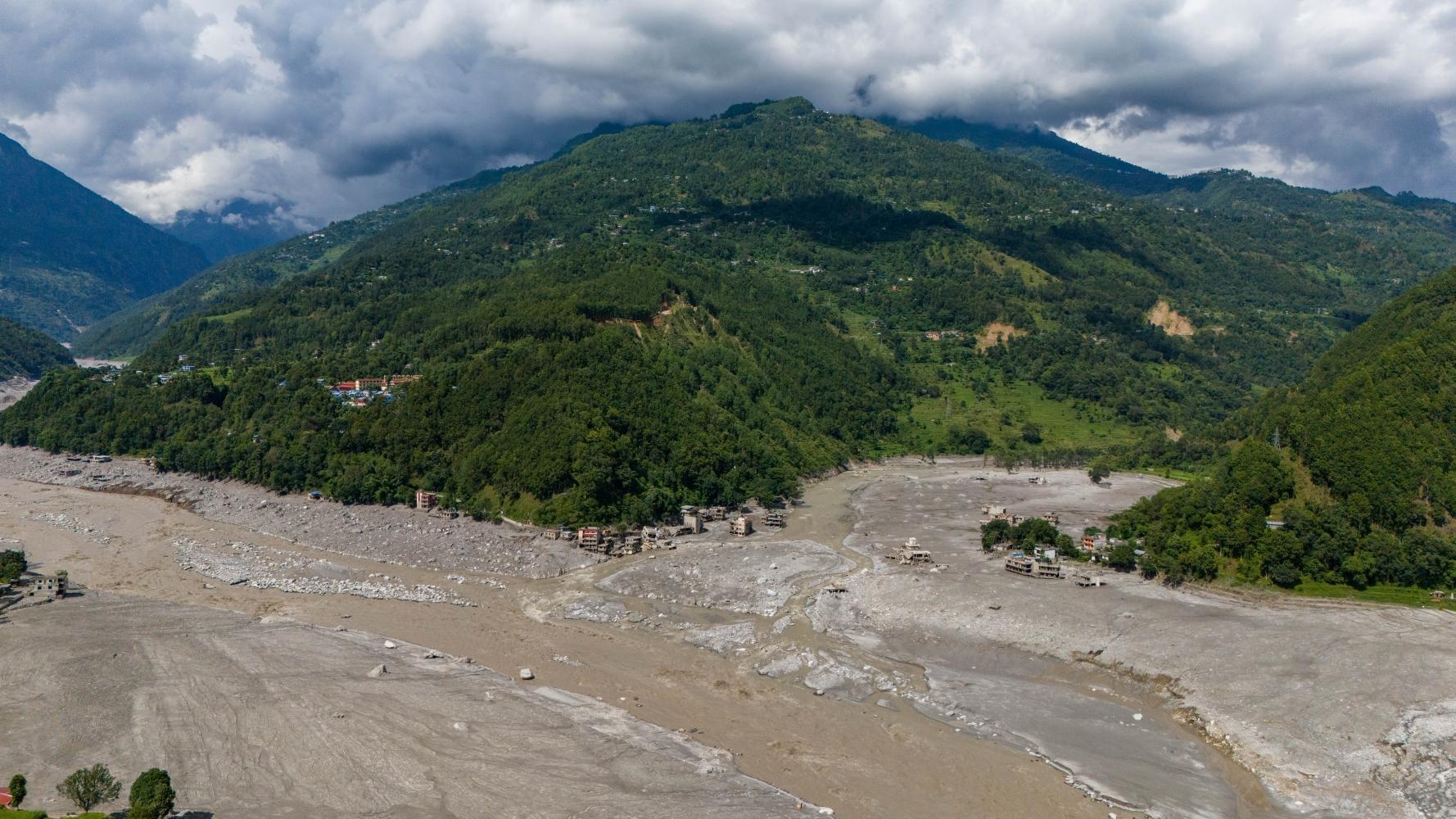
Overview:
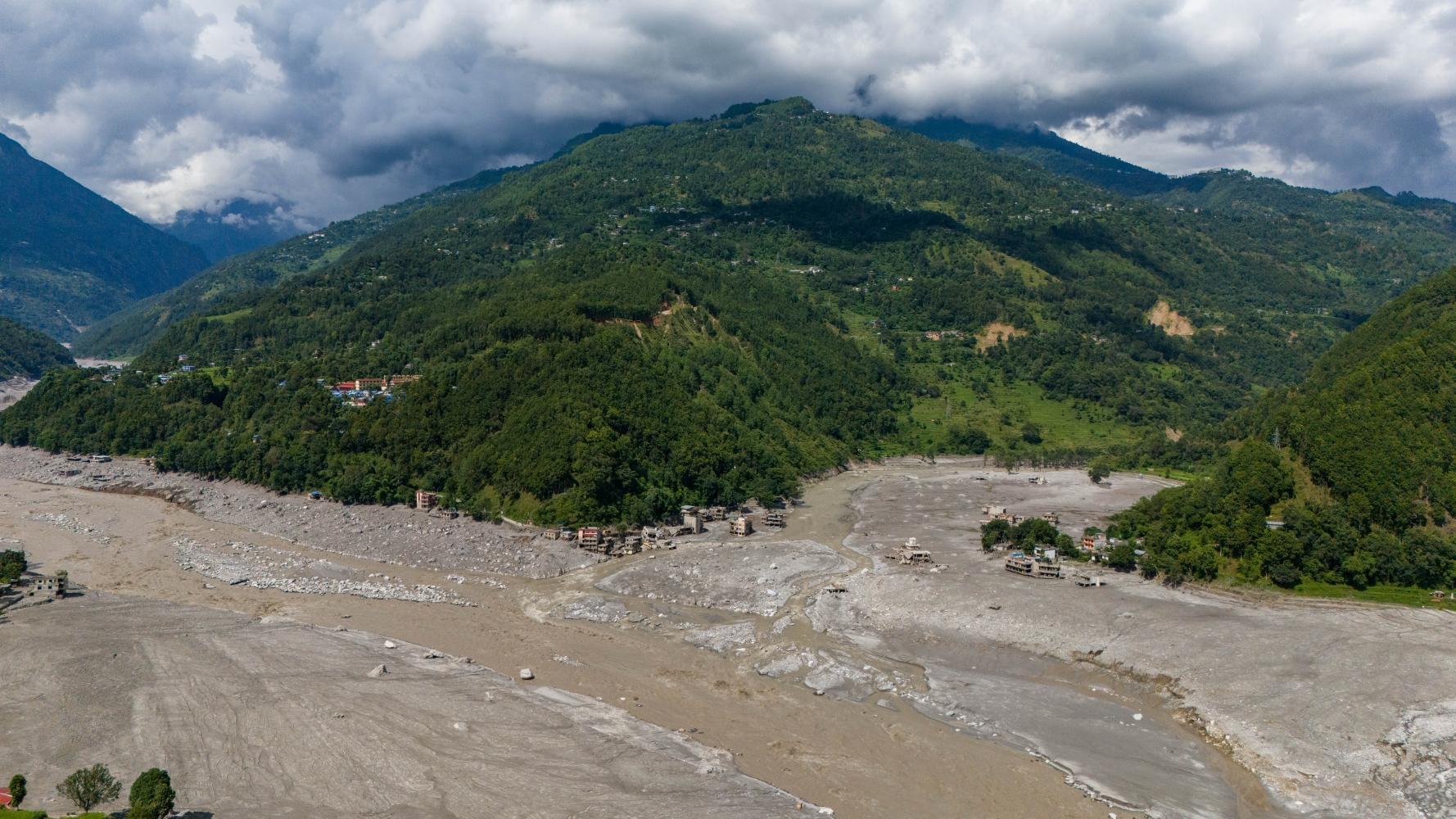
Nepal is a week into recovering from one of the worst natural disasters in its recent history. On August 26, 2026, a glacial collapse in the Himalayas sent rock, ice, and meltwater surging down into the Lhende Khola, Bhote Koshi, and Trishuli rivers, tearing through Nepal's Rasuwa, Nuwakot, and Dhading districts before reaching the Chinese side of the border at Gyirong. The corridor hit Syabrubesi, Timure, and the Rasuwagadhi crossing is also the gateway to the Langtang trekking region and the overland route used by Kailash Mansarovar pilgrims. It has therefore also had implications for communities and livelihoods connected to tourism, alongside its far more immediate humanitarian impact. It is now the deadliest disaster Nepal has faced since the 2015 earthquake, and one that has tested and shown the country's capacity to mobilize its own army, police, and communities in response.
Why We’re Sharing This Update
As an organisation working in Nepal's tourism sector, CHN recognises a responsibility to help keep travellers, partners, communities, and the wider tourism sector informed about significant events affecting destinations and travel routes. Through this update, we aim to bring together the latest information from reliable and credible sources in one place, while being mindful of the responsibility that comes with sharing information during a crisis. We are therefore taking care not to amplify unverified claims, speculation, or misleading information, and to avoid reposting sensitive images of survivors or affected communities. Our intention is to provide useful, verified updates while keeping the dignity and privacy of those affected at the centre.
| As part of our ongoing safety and preparedness measures, our team of road captains carried out a recce trip to identify suitable alternate routes to the currently available one. You can view the full route options and details in our advisory here: CHN Road Advisory |
September 18, 2026
Standing With the Flood-Hit Communities, and With the Nepal That Remains Open
Sumnima Udas, Member of Parliament and Chair of the International Relations and Tourism Parliamentary Committee, published a video addressing the disaster's ripple effects on Nepal's tourism sector.
She opened by naming the scale of the humanitarian toll- directly, lives lost, families displaced, infrastructure destroyed, and entire communities cut off, before turning to what she called a second, harder reality now emerging: the impact on livelihoods and the economy. She was candid that she'd initially been sceptical of tourism messaging appearing while people were still suffering, but said seeing the public response changed her view of why the conversation matters now.
Tourism, she said, is not just an industry for Nepal, it's the livelihood of millions of people, and one of the pillars that can help the country recover. She called on people to support Nepal's tourism community, while being careful to hold both realities at once: acknowledging that parts of the country are still facing immense challenges and that there is much work left to do, while also noting that most of Nepal remains open and able to welcome visitors. She said updates on destinations and routes would continue to be shared responsibly as they reopen, and closed with a direct appeal to keep discovering and supporting the Nepal that remains open, framing it as a way of standing with the country through a moment of significant loss, not a replacement for the humanitarian response.
Sources: Sumnima Udas (Member of Parliament; Chair, International Relations & Tourism Parliamentary Committee), via Instagram.
September 17, 2026
Prithvi Highway Fully Reopens to Two-Way Traffic
Official Notice — Prithvi Highway Back in Full Operation
Above: The official notice issued by the District Administration Office, Dhading, Ministry of Home Affairs, Government of Nepal, dated 31 Bhadra 2083. English translation below.
The District Administration Office, Dhading, under the Ministry of Home Affairs, has issued a public notice confirming that the Prithvi Highway returned to full two-way operation from 6:00 AM this morning, Thursday, 1 Ashwin 2083 (September 17, 2026).
The notice recounts how the sudden and destructive floods in the Bhote Koshi river in Rasuwa district on 10 and 14 Bhadra 2083 (roughly August 26 and August 30) caused the road to subside in the Krishnabhir area, cutting off movement along the highway. Through sustained effort by the agencies involved, a new track was built at the site, allowing the highway to reopen fully.
The District Administration Office extended its thanks and appreciation to everyone who helped restore movement and bring the blocked road back into operation: the Government of Nepal, the provincial government, local levels, the relevant road projects and offices, construction contractors, security personnel, media workers, drivers, passengers, and all other stakeholders.
An important safety caveat. The notice is clear that this is not an all-clear. Several locations along the Prithvi Highway remain at risk of further road subsidence, landslides, and rock and soil falls. Drivers and passengers are urged to travel with particular caution and restraint. Specifically, the office asks that people not take risks travelling during rainfall, or when landslides, rocks, or other obstructions are visible on the road; that they follow the instructions of security personnel and staff deployed for road management; and that they assess road conditions before setting out. For further information on road conditions and transport operations, the notice asks people to rely on official updates issued by the relevant authorities and security agencies.
Notice dated Wednesday, 31 Bhadra 2083. Signed by Laxmi Pandey (Gautam), Chief District Officer, District Administration Office, Dhading. Contact: 010-520133 / 010-520121, [email protected]
Sources: District Administration Office, Dhading, Ministry of Home Affairs, Government of Nepal (public notice, 31 Bhadra 2083).
September 16, 2026
Krishnabhir Track Partially Reopens as Nepal Confronts the Harder Question: Why This Became a Disaster
Route Update: Krishnabhir Diversion Partially Open
The alternative track at Krishnabhir has partially reopened. Vehicles are now being allowed to cross on a limited, scheduled basis — roughly three times a day, opened as needed — while crews finish levelling, gravelling, slope-cutting, and drainage work along the diversion track, which runs about 300 metres and is 7 metres wide.
A loaded test run using a gas tanker was completed successfully over the weekend, and work is now being sped up to move toward full operation. According to the contractor overseeing construction, full two-way operation is targeted for 1st Ashwin (around September 17, 2026). A dozen pieces of heavy equipment were mobilized in the first phase of construction, followed by a final phase involving nearly 50 workers, including skilled labour, to get the track ready. Once the sub-base is finalized, regular two-way transportation will resume.
We will continue to monitor the Krishnabhir diversion progress and update this section as new information becomes available.
Where the Toll Stands
Some 1,386 people have now died, with around 5,130 still unaccounted for. The flood destroyed bridges, hydropower projects, and entire towns.
📰 The Bigger Picture: "Nepal Cannot Stop the Floods. It Can Stop Them From Becoming Disasters."
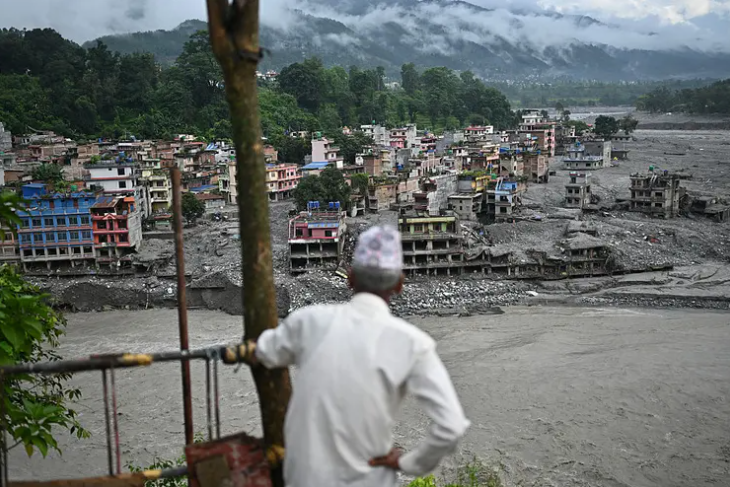
A TIME analysis published this week reframes the disaster in a way worth sitting with — and it lands close to home for anyone working in community tourism.
On tourism, and why this matters to us directly. The piece makes a point that communities like ours know intimately: dependence on tourism shapes a community's capacity to recover. A tragedy of this scale cuts short the season and leaves the people who rely on that trade in a precarious position — and the obvious fallback, agriculture, is just as vulnerable. NDRRMA estimates the floods damaged 1,806 hectares of agricultural land.
The proposed direction is one worth debating openly: researchers at Nepal's leading environmental NGOs and universities have recommended shifting away from low-cost mass tourism toward smaller-scale, higher-value tourism — fewer visitors who pay more, along the lines of Bhutan or Costa Rica. The article is honest that this would be hard for Nepal, whose infrastructure, businesses, and reputation are all built around mass-market travel, and notes the shift would only reduce disaster exposure if new high-end development were built out of harm's way in the first place.
Sources: TIME ("Nepal Cannot Stop the Floods. It Can Stop Them From Becoming Disasters."); NDRRMA; World Weather Attribution; Keshab Kumar Sharma (former secretary, Nepal infrastructure ministry); BBC News; News on AIR; contractor updates via local reporting on the Krishnabhir diversion.
September 9, 2026
PATA Urges Travel Industry to Back Nepal's Recovery Through Accurate Advisories and Donations
The Pacific Asia Travel Association (PATA) has issued an open letter calling on the global travel community to support Nepal's recovery in two concrete ways: through accurate destination reporting and through direct donations.

PATA chairman Henry Oh and PATA Foundation chairman Andrew Jones stressed that the flood damage, while severe, remains geographically concentrated along specific corridors mainly Rasuwa, Langtang, and the Bhote Koshi. They noted that Kathmandu Valley, Pokhara and Annapurna, Everest and Khumbu, Chitwan, Bardiya, Lumbini, the Terai, and Nepal's airports all remain open and operational. Oh and Jones cautioned that conditions in one river corridor should not be taken to represent the situation across the entire country, urging travel businesses and media to rely on verified sources rather than blanket cancellations.
The letter asks travel professionals to review and correct any destination pages, advisories, or itineraries that misrepresent Nepal as broadly affected, a point PATA says is especially important as this is the peak booking season for the country.
On the funding side, PATA Foundation's Nepal Tourism Recovery Fund is set to launch shortly, with proceeds directed toward rebuilding livelihoods for guides, drivers, porters, and families running homestays, lodges, and small hotels along the affected corridor, many of whom lost homes, premises, and equipment along with their income for the season. Organisations wishing to contribute directly can reach out to PATA Foundation ahead of the fund's launch. PATA pointed to the Nepal Tourism Board's live travel page (nepalnow.travel), Nepal Police, and NDRRMA as reliable sources for verified, destination-specific updates.
Nepal Calls for Climate Compensation Over Flood Disaster
Nepal's foreign minister, Shisir Khanal, has called on the world's biggest polluting economies to accept shared responsibility for the disaster, telling The Guardian that Nepal's ministry of finance and ministry of environment have formally requested $20 million in climate-related damages from the UN's loss and damage fund. Khanal pointed out that Nepal contributes less than 0.1% of global greenhouse gas emissions, yet the Himalayas are warming nearly 50% faster than the global average, with the region having lost close to a third of its mountain ice over the past three decades.
Khanal described the scale of the disaster as comparable to the 2015 earthquake, noting that waves of debris, mud, and rock reached heights of 60–70 feet and speeds of up to 180km/h. He acknowledged that the $20 million request falls well short of the estimated $5 billion-plus in total damage, with over 20,000 homes and the main highway needing to be rebuilt, and some riverside villages likely requiring relocation to safer ground.
He also addressed questions about early-warning coordination with China, saying that neither Nepali nor Chinese scientists had any indication the glacier collapse was imminent, despite the glacier's fragility and recession in the months prior. Khanal said discussions with China on improving regional data-sharing are ongoing.
Sources: TTG Asia; TTR Weekly (PATA open letter, Henry Oh and Andrew Jones) The Guardian (Hannah Ellis-Petersen)
September 8, 2026
Nepal Marks a National Day of Mourning as the Search Continues
Nepal observed a national day of mourning on Monday, September 7, marking the final day of the traditional 13-day Hindu mourning period for flood victims. Oil lamps and candles were lit across the country, government offices and Nepali missions abroad flew the national flag at half-mast, and candlelight vigils were held that evening. As of the BBC's report, at least 1,287 people are confirmed dead in Nepal, with 5,083 still missing; on the Tibetan side, Chinese media reported 31 deaths and 531 people unaccounted for as of last Friday.
Nepal's Army says the search hasn't lost momentum even two weeks in. Spokesperson Raja Ram Basnet told AFP that rescue efforts are continuing at the same pace as day one, working simultaneously on the ground, in the air, and inside the hydropower tunnels, with the explicit goal of making sure no one is left stranded. That commitment has paid off: four people have been rescued in recent days, three of them from hydropower stations or tunnels. Most strikingly, a 64-year-old Nepali woman was pulled alive from her partially buried home in Nuwakot on Saturday, more than ten days after a wall of ice, rock, and mud engulfed the building — found alive on the fourth floor by Nepal's Armed Police Force and airlifted to Kathmandu for treatment.
Nepal's President, Ram Chandra Paudel, also toured the worst-affected flood areas on Monday, a sign of the country's leadership staying visibly engaged with recovery efforts even as the formal mourning period closes. On the Chinese side, rescue teams recovered 12 more bodies on Sunday near the Nepal-Tibet border using excavators, shovels, and ground-penetrating radar.
Sources: BBC News (Ayeshea Perera); Reuters (Phanindra Paudel, NEOC); AFP (Raja Ram Basnet, Nepal Army); Arnold Dix (via X); Nepal's Home Ministry; CNN
September 6, 2026
Ten Days On: Two More Survivors Pulled Alive — Toll Passes 1,350
Nepal's peak hiking season runs from September to November.
But for many guides who lead foreigners through the Himalayas each year, they must now carry something heavier into the mountains: their grief.
Nepal's tourism minister, Khadak Raj Paudel, urged travellers not to cancel their trips, saying their support helps the country "fight this catastrophic tragedy".
By Angelica Silva and Libby Hogan, ABC Asia Pacific Newsroom.
By Saturday, a CNN tally of figures from Nepali and Chinese authorities put the combined death toll at more than 1,350, ten days after the glacial-collapse flood first struck.
Two more people were pulled out alive on Saturday, a full ten days after the disaster, in what rescuers are calling a genuine second miracle in as many days. A 49-year-old Chinese national, Lu Haitao, was rescued from a 225-meter tunnel at the Upper Trishuli-1 hydropower project by a joint team of Nepali soldiers and South Korean disaster specialists. Separately, 60-year-old Chandika Shrestha was found alive on the upper floor of a four-story building in the devastated community of Betrawati; her family had already begun ceremonial last rites, believing she had died. It comes one day after two Nepali workers were dramatically pulled alive from the same Trishuli-3A tunnel complex on Friday, bringing the total rescued from these hydropower sites to at least three in two days. Lu Haitao's sister, who had stopped working entirely after learning her brother was missing, said the whole family finally feels able to breathe again now that he's been found.
Rescue efforts remain concentrated on 12 hydropower projects across Nepal, where roughly 900 workers are still missing, and an estimated 500 are believed to remain trapped in various tunnels. Thousands of families across Nepal and China remain in agonising limbo, not knowing whether missing loved ones are alive. Nepal's Foreign Ministry said Saturday that more than 7,500 homes and around 55 kilometres of road have been damaged nationwide. A UN report estimates roughly 35,000 people need safe temporary accommodation, while 43,000 are at immediate risk of food insecurity, a reminder that the humanitarian need now extends well beyond the search-and-rescue effort itself.
Sources: Reference: CNN — two survivors rescued 10 days after the floods; CNN live updates, September 5; SCMP video — two people, including a Chinese national, rescued 10 days on
September 4, 2026
A Breakthrough at Trishuli 3A: Voices Heard, Then Rescues, Nine Days On
Reference: CNN — voices heard, then two men rescued at flood-stricken Nepali power plant; SCMP — Nepal's tourism industry after the flood disaster
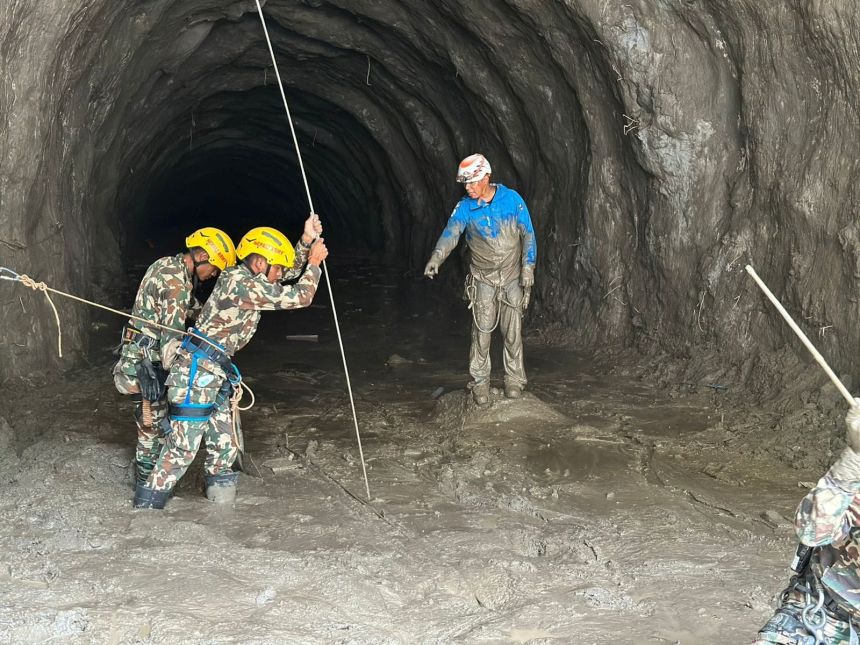
Nepal-China flash flood figures rose further today, with Anadolu Agency reporting the combined death toll at 1,280 and more than 5,620 people still missing across both countries as search and rescue operations enter their second week.
Rescuers heard voices coming from inside the Trishuli 3A tunnel for the first time, the first sign of life nine days after the disaster. Local police chief Bipin Regmi confirmed the discovery, and a medical team was dispatched to the site. Shortly after, two men were pulled from the tunnel in quick succession — video showed rescuers pulling one man from a small opening in the ground as the team around him broke into applause. It's a genuine breakthrough after more than a week of fading hope, and rescue teams are continuing to search for others who may still be alive inside.
SCMP reports that Nepal's tourism sector — heading into its peak September-to-October season — is describing the fallout as an "existential crisis," even as operators stress that most of the country remains open and safe. Tourism entrepreneur Rajendra Lama, who has spent recent days coordinating both rescue operations and anxious client calls, said the crisis is confined to one part of the country while the rest remains unaffected and open. Around 600 tourists are among those still missing nationwide, many of them pilgrims who were travelling toward Mount Kailash in Tibet. Operators point out that the popular Everest and Annapurna regions have not been physically affected by the flood and remain safe for travel.
The Nepal Tourism Board has specifically advised travelers to steer clear of the Trishuli and Bhote Koshi riverbanks, and industry guidance is now recommending that anyone with a Langtang or Langtang-Gosainkunda trek booked reroute or postpone, since the road to Syabrubesi has been destroyed and Trishuli Bazaar sustained major damage that will take months to rebuild. An alternate route via Dhunche exists but adds roughly two extra days and hasn't yet been fully assessed for safety. Separately, tour operators with clients on the Nepal-Tibet corridor, including Tibet Vista, have confirmed that all of their travelers and staff are safe. On the financial side, Nepal — one of South Asia's least developed economies — has estimated the cost of rebuilding at $4-5 billion, close to a tenth of its GDP, and China's Foreign Ministry says it is preparing a third batch of emergency aid.
Sources: CNN (Trishuli 3A rescue reporting); SCMP (Bibek Bhandari); CNBC; NDRRMA; BBC live page and CN Traveller Middle East piece
September 3, 2026
Toll Rises to 1,252 as 4,216 Remain Unaccounted For
Reference: The Kathmandu Post — "Nepal flood toll rises to 1,252 as at least 4,216 remain unaccounted for"
According to NDRRMA figures compiled as of Thursday noon, Nepal's confirmed death toll has risen to 1,252, with at least 4,216 people still unaccounted for. The highest number of deaths has come from Chitwan (355 bodies recovered), followed by Nawalparasi East (218), Nawalparasi West (208), and Nuwakot (177); Rasuwa, where the disaster began, has recorded 127 deaths so far, with further bodies also recovered in Gorkha, Dhading, and Tanahun.
Rescuers, per a Reuters report from Nuwakot today, continue to battle thick mud and ruined roads as the search goes on. More than 21,000 security personnel have now been deployed for search, rescue, and relief operations, and authorities report 11,913 people rescued so far. The Nepali Army has airlifted 4,364 people across 715 helicopter flights, including 273 foreign nationals, with private helicopter operators carrying out a further 129 emergency flights. Telecommunications are being restored across the disaster zone — Nepal Telecom says all 110 of its damaged towers are back in operation, and Ncell has restored 75 of its 78 damaged sites.
Nepal Police Search & Rescue Update (Official Infographic, as of Bhadra 18, 2083 / September 3, 2026, 10:00 AM):
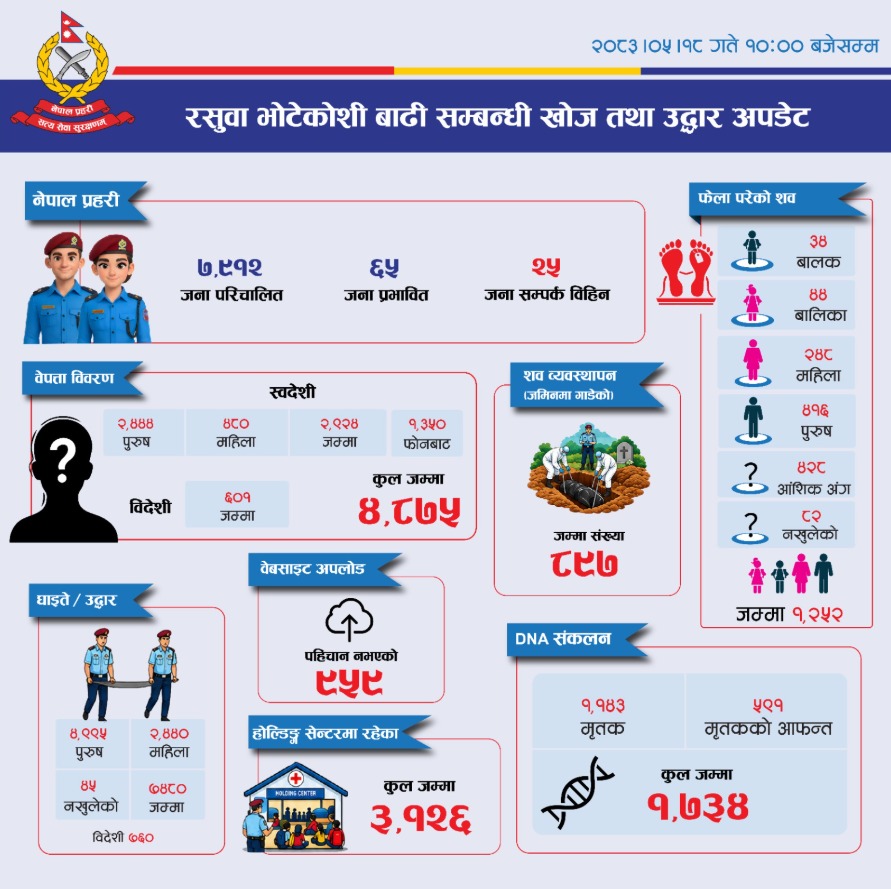
Infographic translated below:
Nepal Police deployment: 7,892 personnel mobilized; 65 personnel affected; 25 personnel out of contact.
Bodies found (breakdown): 34 boys, 44 girls, 248 women, 416 men, 428 partial remains, and 82 unidentified — total bodies found: 1,252.
Missing-persons details: Domestic — 2,444 male, 480 female; 1,350 reports received via the police hotline; foreign nationals reported missing — 601. (Note: these are raw police-intake figures and may differ slightly from NDRRMA's verified count of 4,216 cited above, as reports are still being cross-checked.)
Body management (buried, pending identification): 897 total.
Injured/rescued: 4,995 men, 2,440 women, 45 unidentified — total 7,480, including 760 foreign nationals.
Website upload for identification: 959 unidentified cases uploaded for public/family identification.
Remaining in holding centres: 3,126 people.
DNA sample collection: 1,143 samples from the deceased, 591 from relatives of the deceased — total 1,734 samples collected so far.
Sources: NDRRMA, Nepal Police (via Kathmandu Post), Reuters
September 2, 2026
One Week On: Nepal's Toll at 1,114—Nearly 12,000 Rescued
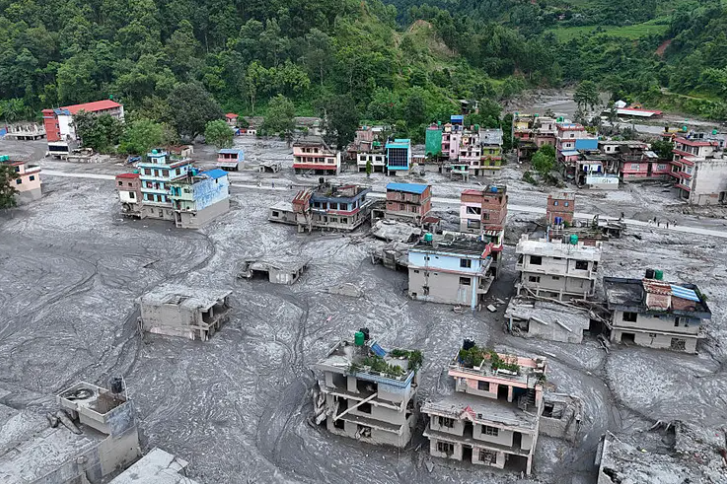
One week after the disaster began, NDRRMA's Wednesday morning update placed Nepal's confirmed death toll at 1,114. Roughly 4,500 people remained missing across Nepal and China combined, and scientists flagged that glaciers near the original collapse site may still be unstable, keeping authorities on alert for further risk.
The death toll continues to climb a full week on, and Nepal's Foreign Minister, Shishir Khanal, told international media the government is still working to save lives at hydropower tunnel sites, a sober reminder that this crisis is far from over.
Nearly 12,000 people have now been rescued by Nepali forces and volunteers. Stories of ordinary Nepalis saving their neighbors keep surfacing, including a local bus driver who safely evacuated 50 children moments before the floodwaters hit — the kind of community courage this network was built to celebrate.
Sources: NDRRMA, Ministry of Foreign Affairs (via CNN)
September 1, 2026
Death Toll Crosses 1,000 Prime Minister Shah Announces a Rescue Milestone
NDRRMA's Tuesday update raised Nepal's death toll from 987 to 1,003, or 1,019 combined with China's toll of 16.
3,916 people remained missing in Nepal, including 583 foreign nationals from 38 countries. Mass burials were held in Bharatpur for unidentified victims, and Nepal's Ministry of Health said only around 4% of recovered bodies had been identified so far — a painful, ongoing task for grieving families.
Minister Balendra Shah announced that 279 workers had been rescued alive from hydropower tunnels where more than 900 had initially been feared trapped, pushing Nepal's total rescued past 11,800. Electricity and communication lines were also restored in several previously cut-off areas, and Shah pledged to raise the region's growing climate risks with the international community.
Captain Priya Adhikari, Nepal’s first female helicopter captain, has flown nearly 100 missions in just days – navigating treacherous valleys and unstable ground, to bring survivors to safety and dignity to the dead.
Office of the Prime Minister, NDRRMA (via CNN, Al Jazeera, UN News)
August 31, 2026
Toll Passes 900 as Nepal's Rescue Effort Passes 10,000 Saved
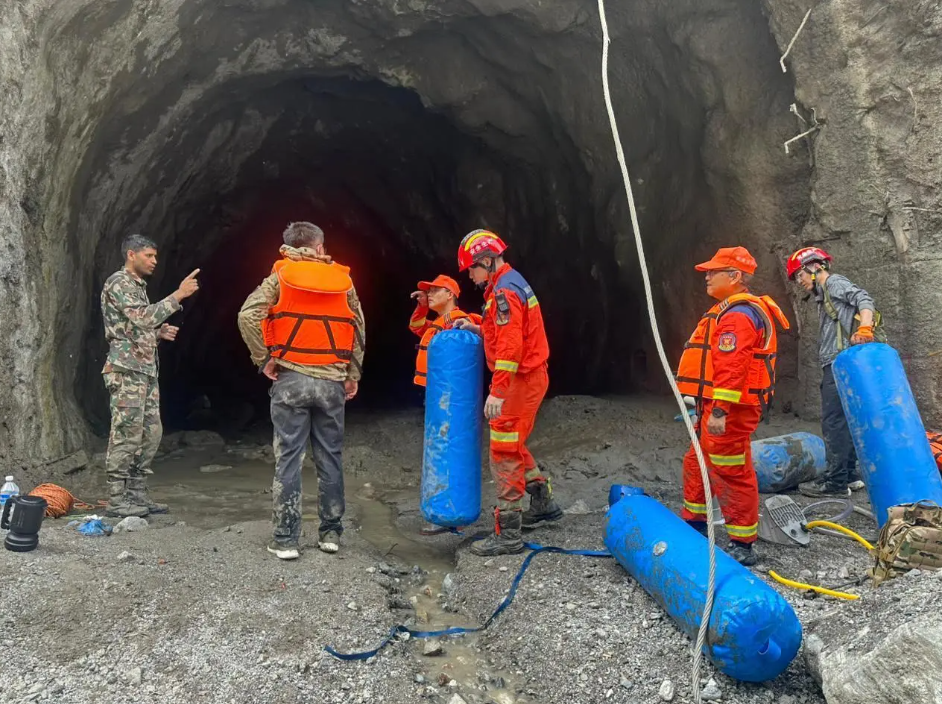
Nepal's confirmed death toll surged to 903, with 538 bodies formally recovered and more than 4,200 people still missing making Nepal's deadliest disaster since the 2015 earthquake, which killed around 9,000 people.
Nepali engineers carried out a difficult controlled explosion at a hydropower tunnel to reach hundreds of workers feared trapped in mud-filled passages. More than 10,000 people had now been rescued in total, including 252 foreign nationals caught in the disaster, a milestone that reflects the scale of Nepal's own search-and-rescue effort.
Sources: NDRRMA (via UN News, BBC News)
August 30, 2026 (Bhadra 14, 2083)
A Fresh Flash Flood Warning Across Much of the Country
disaster authorities issued a fresh warning on Bhadra 14, flagging Nuwakot and Rasuwa as facing a high possibility of flash floods that day, with water levels in the small rivers running through both districts expected to rise significantly. A moderate flash flood risk was also forecast for a long list of districts spanning the country Panchthar, Terhathum, Taplejung, Sankhuwasabha, Solukhumbu, Okhaldhunga, Ramechhap, Dolakha, Sindhuli, Sindhupalchok, Kavrepalanchok, Lalitpur, Bhaktapur, Kathmandu, Dhading, Makwanpur, Gorkha, Lamjung, Tanahun, Syangja, Kaski, Parbat, Myagdi, Baglung, Gulmi, Bardiya, Kailali, Darchula, Baitadi, Dadeldhura, and Kanchanpur. Authorities urged anyone living or travelling near small rivers and flood-prone areas in these districts to stay alert for sudden rises in water levels.
The sheer breadth of this warning in nearly 30 districts across the eastern, central, and western regions showed just how widely the monsoon and the aftershocks of the initial disaster were straining Nepal's rivers, well beyond the original flood zone.
Nepali communities in the disaster zone had already begun their own cleanup efforts alongside government-led rescue and recovery work, and relief agencies scaled up supplies, temporary shelters, and medical camps across Nuwakot and Dhading. By day's end, no major secondary flood had struck; the warning system had done its job, and it gave communities in the listed districts precious time to prepare.
Sources: NDRRMA, 24 Ghanta Nepal, District Administration Office, Rasuwa
August 29, 2026
Toll Reaches 734 as Aid Reaches Remote Villages
Nepal's death toll rose to 734, with close to 2,500 people still missing nationwide, and NDRRMA warned that flow in the Bhote Koshi River near the China border had increased and could be heard rising, keeping the threat of further flooding alive.
Nepali rescue crews pushed into some of the hardest-to-reach corners of Rasuwa for the first time since the disaster, delivering food, medical supplies, and aid to villages that had been completely cut off for days.
Sources: NDRRMA, Nepal's Disaster Management Authority (via CNN, Al Jazeera)
August 28, 2026
Toll Surpasses 600 as Nepal Watches Its Northern Border
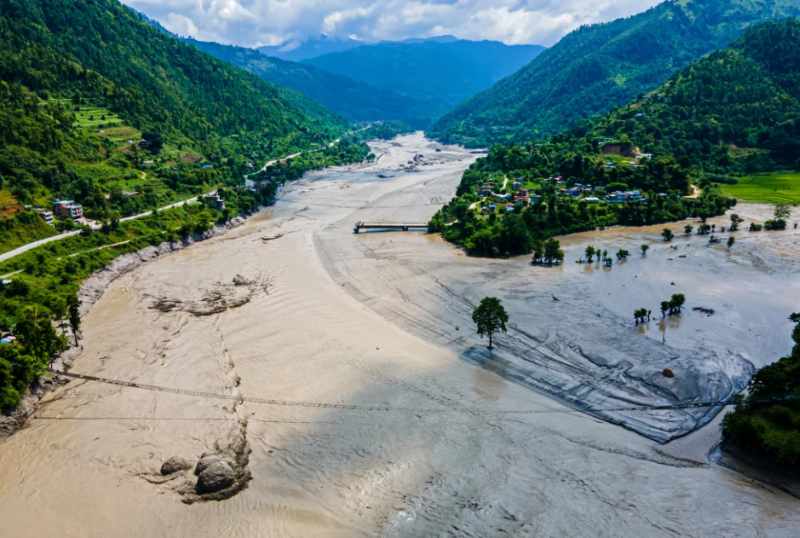
Nepal's confirmed death toll climbed to 616, with 2,301 injured and roughly 2,500 people still missing on the Nepali side of the border. Nepal's Disaster Management Authority also flagged two new glacial lakes that had formed upstream, warning they posed a continued risk to communities in Rasuwa and beyond.
Satellite monitoring was activated to track those new lakes and give downstream villages as much early warning as possible, a proactive step that would help protect communities in the days ahead.
Sources: NDRRMA, Nepal's Disaster Management Authority (via Reuters, CNN)
August 27, 2026
Nepal Police Confirms Rising Toll as the Nation Mobilizes
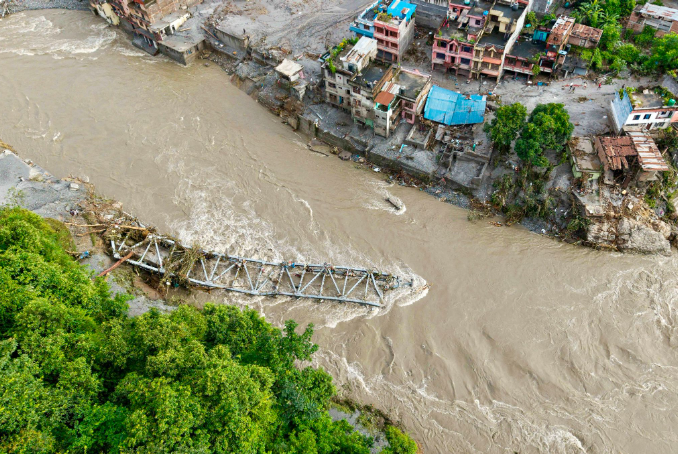
By Thursday morning, Nepal Police confirmed 469 dead, up from 389 the day before, with 466 people injured and more than 1,300 people still unaccounted for across the affected districts.
Nepal deployed 4,348 of its own security personnel into the disaster zone within a day of the flood. More than 250 bodies had already been recovered by local rescue teams for identification, and Nepal Army helicopters spent the day moving displaced residents from cut-off villages to safer ground in a fast, largely domestically-led response.
Sources: Nepal Police, NDRRMA (via CNN, BBC News)
August 26, 2026
The Flood Hits Rasuwa
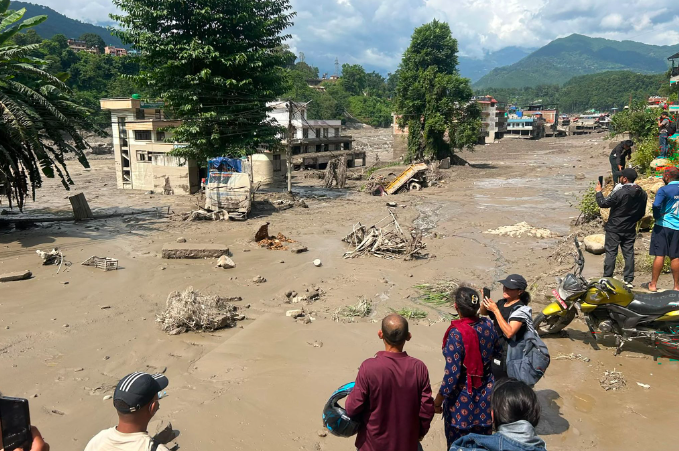
A glacial collapse high above the Nepal-China border sent a wall of rock, ice, and meltwater crashing down into Rasuwa district, with the Trishuli River rising by as much as nine meters in just half an hour. Six of Nepal's own hydropower and transmission facilities were damaged, cutting power across the region, and at least 17,000 children would go on to be affected by the disaster in Rasuwa, Nuwakot, and Dhading alone.
Within hours, the Nepal Army and Nepal Police had mobilized, launching search and rescue operations around Bidur, Trishuli, and the surrounding valleys, and moving to evacuate villages before the water could rise further downstream, a rapid first response that likely saved many lives in the disaster's earliest, most chaotic hours.
Sources: Nepal Police, NDRRMA, Nepal News (via BBC News); Rasuwa District Administration Office; UN News
Sources & References
Sources: Nepal's National Disaster Risk Reduction and Management Authority (NDRRMA), Nepal Police, Ministry of Foreign Affairs, Office of the Prime Minister, and relevant District Administration Offices, with additional reporting from BBC News, CNN, AP, Al Jazeera, Reuters, NBC News, Time, and UN News, alongside specialist trekking and tourism-industry advisories.